















Electric Fence Grounding Guide: How Many Earth Rods, Where, and How to Test
A fence that reads 7,000 V at the energizer and 2,000 V at the far end is almost never a failing energizer. It is a failing return path. The pulse leaves the unit, travels the fence, passes through the animal and has to get back through the soil to the earth rods — and every ohm on that return journey is energy the animal never feels. This guide covers rod count, spacing, soil, testing and the mistakes that look like product faults.
Install one 20 mm × 1 m galvanised earth rod per joule of energizer output, spaced at least 3 m apart along the fence line, connected to the EARTH terminal with a dedicated conductor. A 3.5 J unit takes 4 rods, a 4.8 J unit 5, a 12 J unit 12. In dry sand, gravel or rock, add rods or run a dedicated earth-return wire — a bigger energizer will not fix a poor earth.
Quick facts
- Rod count follows output: 1 rod for 1 J, 4 for 3.5 J, 5 for 4.8 J, 8 for 8 J and 12 for 12 J (KZN Agriculture & Rural Development).
- Rods are 20 mm × 1 m galvanised steel, driven along the fence line and spaced at least 3 m apart — never bunched at the energizer.
- The fence earth must be separate from building electrical earth, plumbing and utility grounds.
- Target readings: 6,000–8,000 V at the terminals, never below 2,000 V at the far end for cattle and 3,000 V for wooled sheep.
What electric fence grounding actually does
An energizer pushes a short pulse onto the live wire. The circuit is only completed when the current returns to the unit — through the animal, into the soil, and back up the earth rods. The earth system is the second half of that circuit, and it is the half that gets installed last, cheapest and worst.
This is why the same energizer performs differently on two farms. On damp loam with four rods the return path is easy; on dry gravel with one rod the same unit delivers a pulse the animal can shrug off. The label never mentions it.
How many earth rods an electric fence needs
| Energizer output | Earth rods | Typical models | Notes |
|---|---|---|---|
| 1 J | 1 rod | HPSA100, HPSS100 | Poultry netting and short garden runs |
| 2 J | 2 rods | HPSA200-AC/DC | 20–50 head on permanent fence |
| 3.5 J | 4 rods | HPS350, HPSS350 | The most common livestock installation |
| 4.8 J | 5 rods | HPS480 | Long runs with vegetation contact |
| 8 J | 8 rods | HPS800 | Reserves and wildlife boundaries |
| 12 J | 12 rods | HPS1200N, HPSS1200 | Very long runs and extreme loads |
Rod count is a minimum for average soil. Dry sand, gravel or rock needs more rods, longer rods, or a dedicated earth-return wire.
20 mm × 1 m galvanised rods, spaced at least 3 m apart along the fence line. Bunched rods share the same dry pocket of soil and behave like one rod.
Where to put the rods: spacing, depth and soil
Position matters as much as count. A rod driven into the damp shade of a hedge can outperform three rods in cracked clay at the top of a rise, because what the return path needs is contact with moisture, not with steel.
- Space them along the fence, not at the energizer. Three metres minimum between rods; five is better in dry conditions.
- Drive them where the soil stays damp — a low corner, the shade side of a hedge, near a downpipe outlet rather than on a ridge.
- Leave 100–150 mm above ground so the clamp sits clear of soil and water.
- Protect the tops where stock or machinery pass; a bent rod with a cracked clamp is a future fault.
- Do not drive through a concrete apron or gravel bed. Move the rod, do not force it.
Rod materials and connections that survive ten years
Grounding fails at the joints far more often than in the soil. Galvanised rods with galvanised clamps, tightened onto bright metal, are the baseline; copper-clad rods suit permanently wet sites but invite electrolytic corrosion where they meet galvanised fence hardware.
The conductor from the EARTH terminal to the rods should be a dedicated, insulated earth cable — not a spare length of fence wire, and not the fence's own return strand. Bury it where vehicles cross, and leave a service loop at each rod so the clamp can be re-tightened without re-driving anything.
How to test a fence earth (and what the readings mean)
You cannot judge an earth by looking at it. Two field tests are enough for most installations, and both need the fence running.
- Load test. Read voltage at the energizer terminals, then at the far end. A fall of more than about 30% across a clean fence points at the return path before it points at the energizer.
- Remote-rod test. Drive a temporary rod 20–30 m away from the earth system, and measure between the last installed rod and the temporary one. A significant reading means the current is finding resistance in the soil instead of an easy path.
- Joint check. With the energizer off, inspect every clamp for white corrosion or looseness — the two things that quietly add ohms every season.
- Seasonal re-check. Test in the dry month, not the wet one. An earth that passes in spring can fail in February.
Grounding in dry, sandy and rocky soil
Where the soil cannot carry the return current, the answer is a different circuit, not a bigger energizer. Two approaches work: more earth, or a wired return.
- More earth: double the rod count, use longer rods, or dig a trench and bury a length of bare conductor where moisture collects.
- Earth-return wire: run a dedicated uninsulated return wire along the fence, connected to the earth system at intervals. The animal then completes the circuit through wire, not soil, which is the standard solution on dry or frozen ground.
- Offset the earth: in very dry conditions, place the earth system at a damp location away from the fence and run the earth conductor back to the energizer.
Grounding mistakes that look like energizer faults
| Mistake | What the customer sees | What is actually wrong |
|---|---|---|
| One rod for a 4.8 J unit | Weak shock, animals walk through | Return path cannot carry the pulse |
| Rods bunched at the unit | Works in wet weather only | All rods share one dry pocket of soil |
| Building earth used as fence earth | Erratic readings, noise on the line | Wrong circuit, and a safety problem |
| Earth clamp loose or corroded | Voltage falls through the season | Resistance rises at the joint |
| Earth cable run alongside the live lead | Induced leakage, weak far end | Separate the two conductors |
| No rods at all — “the post is metal” | Fence reads zero under load | A post is not an earth system |
Grounding for solar, DC and AC/DC installations
The earth system is identical across power types; only the power path changes. Solar units add a panel and battery, DC units a battery only, and AC/DC units a mains input alongside the battery — but all three still return the pulse through the same rods.
Two type-specific notes matter. On solar installations, keep the earth conductor away from the battery negative unless the manual explicitly bonds them; on AC/DC units, never use the mains earth as the fence earth, even when the unit is running from mains. The full wiring sequence for each type is in our installation guide for solar, DC and AC/DC energizers.
HPS FENCE as an electric fence energizer manufacturer
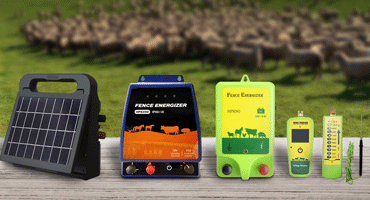
HPS FENCE is the brand of Hangzhou Opus Fence Supplies Co., Ltd, building energizers in Hangzhou since 2013 with category experience back to 2002. Output spans 0.25 J to 12 J across mains, battery, solar and AC/DC formats, sealed to IPX6, and shipped to distributors in Australia, New Zealand, Europe, the United States, Canada, South America, Korea and Japan.
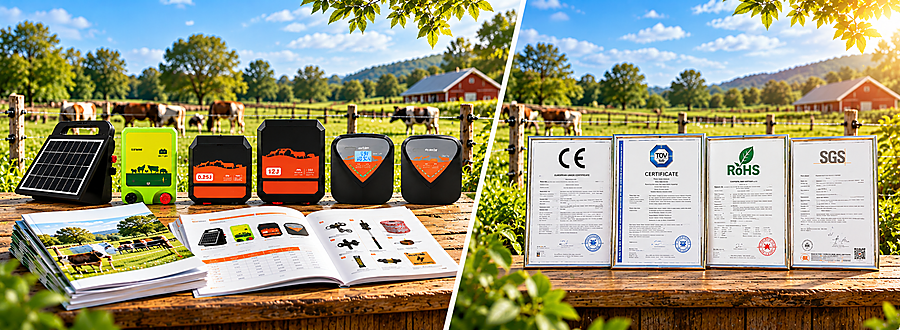
Real output test method published, not just a label value.
Read the test methodContinuous run with output, energy and temperature monitored.
See the production processPackaging verified for container and parcel transit.
See the drop testVerified per production batch, not on a single prototype.
View certificationsEvery unit checked before packing, with batch traceability.
Inspection stepsOutput and safety data filed by model and batch, supplied with the order.
Request a batch recordPrivate label and OEM for energizer ranges
Private label covers the housing label, retail box, manual, model naming, colour and output specification — including an earth-rod count table printed in the manual, so the installer has the specification at the fence rather than on a website.
Branding and packaging
- Logo on housing, retail box and manual
- Model naming and colour to suit your catalogue
- Packaging engineered for e-commerce and container transit
Technical and documentation
- Output voltage and joule specification per market
- Multilingual manuals, including installation guides
- Full ODM development with scheduling and sample approval
Wholesale terms for energizer buyers
Energizers and the earth system they need

2 J dual source
2 J delivered · 9 kV peak · AC or 12 V
Needs 2 earth rods; 20–50 head on permanent fence.
View product details
3.5 J AC/DC
3.5 J · 55 miles clean fence · 250 acres
Needs 4 rods — the most common livestock job.
View product details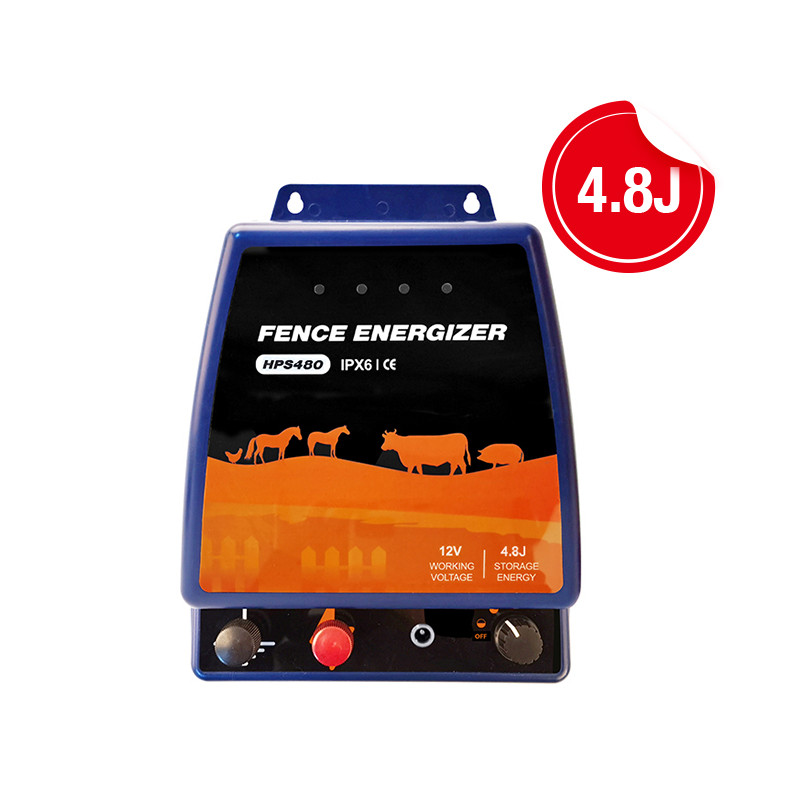
4.8 J AC
4.8 J · AC 110 V · added power reserve
Needs 5 rods; long runs through grass.
View product details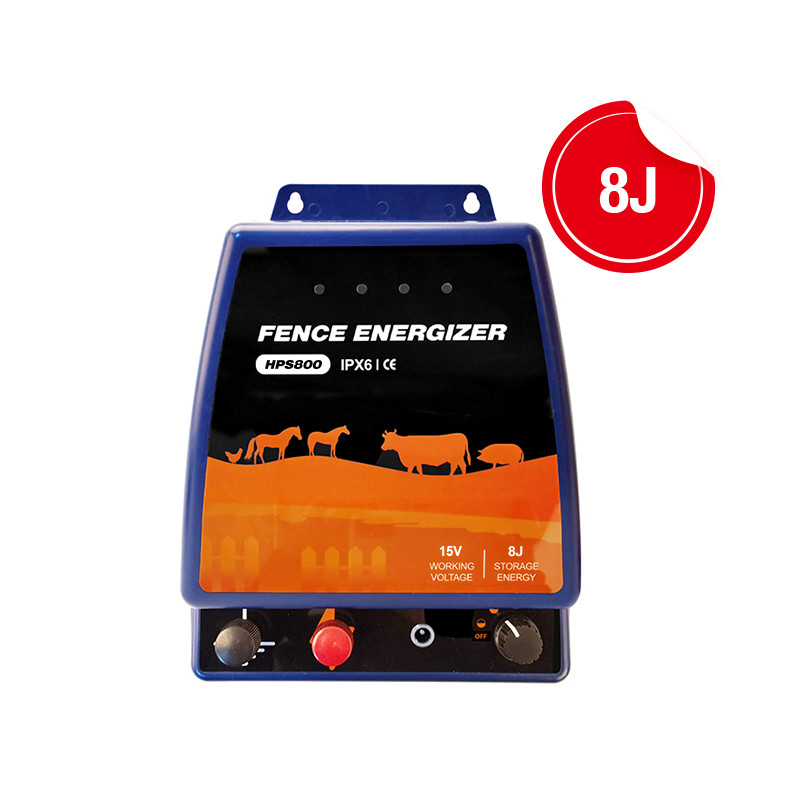
8 J high power
8 J input · 4.8 J delivered · 13 kV · 80 km
Needs 8 rods; reserves and wildlife.
View product details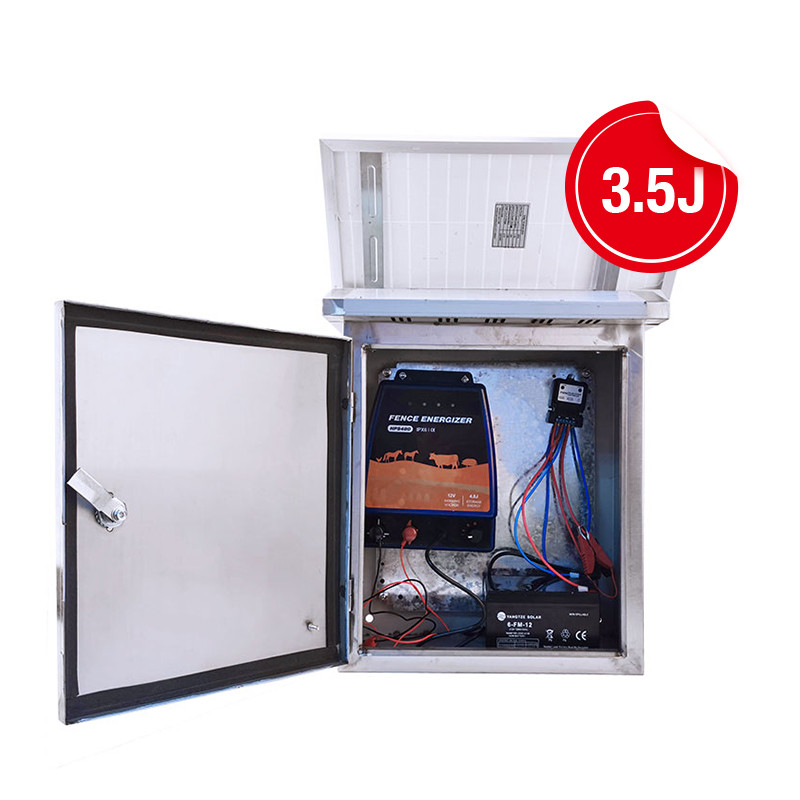
Solar 3.5 J
3.5 J input · 2.1 J delivered · 30-mile range
Needs 4 rods; remote paddocks without mains.
View product details
Solar 6 J
6 J input · 3.6 J delivered · 60-mile range
Needs 6 rods; long remote cattle runs.
View product detailsElectric fence grounding FAQ
How many earth rods does an electric fence need?
One 20 mm × 1 m rod per joule of energizer output: 1 for 1 J, 4 for 3.5 J, 5 for 4.8 J, 8 for 8 J and 12 for 12 J. Space them at least 3 m apart along the fence line, and add more in dry or rocky soil.
Can I use my house earth for the electric fence?
No. The fence needs its own rods and its own conductor to the EARTH terminal. Building earth, plumbing and utility grounds must stay separate — using them is both ineffective and a safety issue.
Why does my fence work in winter and fail in summer?
Soil moisture. Dry soil raises the resistance of the return path, so the same energizer delivers less. The fix is more rods, longer rods or an earth-return wire — not a larger energizer.
How do I test whether my earthing is good enough?
Compare voltage at the energizer with voltage at the far end: a fall of more than about 30% on a clean fence points at the return path. Then drive a temporary rod 20–30 m away and measure between it and the last installed rod.
What is the MOQ for wholesale energizers and earth kits?
One unit on energizers, testers and coop doors; 100 units on other categories. Earth rods, clamps and tester units can be mixed into the same shipment, so a dealer can quote the whole circuit.
Sources
- KZN Department of Agriculture & Rural Development — Electric Fencing in Agriculture: earth rod count, 20 mm × 1 m rod specification, spacing and minimum voltage by species.
- IEC 60335-2-76:2002+A1:2006 / BS EN IEC 60335-2-76:2021 — output energy ≤5 J, pulse duration ≤10 ms, repetition rate ≤1 Hz.
- HPS FENCE product specifications — output energy and power source across the 0.25–12 J range.
- HPS FENCE — How to Test Real Output: measured efficiency and the stored-versus-delivered gap.
HPS FENCE · MANUFACTURER & WHOLESALE SUPPLIER
Your Trusted Partner for Electric Fencing & Farm Solutions
From electric fence energizers and fencing accessories to poultry farming equipment, HPS FENCE supports global distributors, wholesalers, importers, and brands with reliable products, flexible OEM/ODM customization, and long-term supply solutions.