










What Is an Electric Fence? A Complete Beginner's Guide
An electric fence is a psychological barrier rather than a physical one. A conductive wire carries short high-voltage pulses produced by an energizer, and an animal that touches the wire while standing on the ground completes the circuit and receives a brief shock. The animal learns the boundary and stops testing it. Nothing about the fence resists the animal's weight — the deterrent is the pulse.
An electric fence consists of an energizer, a conductive fence line, insulators and a ground rod. The energizer delivers pulses limited by IEC 60335-2-76 to 5 J or less, under 10 ms each, at no more than 1 Hz. In New Zealand cost surveys, a four-wire electric fence averages NZD 6.56 per metre against NZD 13.02 per metre for a conventional eight-wire fence — roughly half the cost — and Alberta field data recorded a 90% reduction in sheep predation losses behind electrified pasture fences.
Quick facts
- An electric fence is a psychological barrier: an energizer, a conductor, insulators and a ground rod.
- A four-wire electric fence averages NZD 6.56 per metre against NZD 13.02 for an eight-wire conventional fence (New Zealand MPI).
- IEC 60335-2-76 caps every pulse at 5 J, 10 ms and 1 Hz.
- Electrified pasture fences cut sheep predation losses by 90% in Alberta field data.

How the electric fence was developed
The electric fence was not developed as a cheap substitute for wire. It was developed because a physical barrier strong enough to hold livestock is expensive, heavy and slow to move. The first practical energizers appeared in New Zealand in the 1930s, using alternating current and delivering long, unpredictable pulses. The design changed decisively in the 1980s, when solid-state switching shortened the pulse to a few milliseconds at roughly one pulse per second — the format every modern unit still uses, and the reason the shock is memorable without being dangerous.
The five parts of an electric fence system
Whether the fence protects two acres of poultry or two hundred acres of cattle, it is assembled from the same five components. Omitting any one of them weakens the entire system.
Energizer
Converts mains, battery or solar power into high-voltage pulses. Rated in joules. A 0.25 J unit suits poultry and pets; 1 J and above handles cattle and long runs.
Fence line
Galvanised wire, aluminium wire, polywire, polytape or netting. The conductor must stay continuous — one break stops the pulse downstream of it.
Insulators
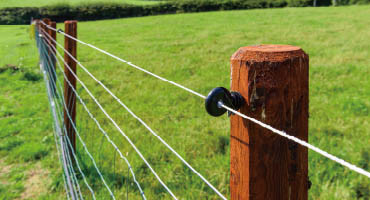
Plastic or porcelain components holding the wire clear of posts. A metal post touching bare wire grounds the whole fence.
Ground rod
A galvanised rod driven at least two metres into damp soil. The earth array is the most common failure point on new installations.
Posts and gates
Wood, fibreglass or steel posts carry the line. Gates need an insulated handle or an under-gate cable so the pulse continues across the opening.
Electric fence cost vs conventional fencing
Cost is the main reason farmers switch, and the gap is larger than most buyers expect. New Zealand's Ministry for Primary Industries collected labour and material prices from 52 fencing contractors across 15 regions and published average cost per metre by fence type and terrain.
A four-wire electric fence comes in at 50% of an eight-wire conventional fence, and a two-wire cattle fence at 36%. Western Australian government guidance gives a wider range for materials alone — AUD 500 to 1,000 per kilometre for electric, against up to AUD 2,000 per kilometre for conventional wire — which points the same way.
Types of electric fence: permanent, portable and powered
| Type | Best for | Typical conductor | Notes |
|---|---|---|---|
| Permanent | Cattle, horses, boundary fencing | High-tensile galvanised wire | Long service life; needs tensioning and sturdy posts |
| Temporary | Rotational and strip grazing | Polywire on reels | Moved weekly; light posts, fast setup |
| Portable netting | Poultry, sheep, goats | Pre-woven electric netting | All-in-one posts and conductors; easy to relocate |
| Mains powered | Farmsteads with reliable power | Any | Highest output for the cost; needs a dry mounting point |
| Battery powered | Remote paddocks | Any | 12 V battery; output falls as the battery discharges |
| Solar powered | Off-grid and seasonal sites | Any | Panel plus battery; output depends on sunlight hours |
What animals can an electric fence contain?
- Cattle: two to three wires, 0.5 J and above, with a strong first shock. Cattle learn quickly and rarely test again.
- Horses: visible polytape rather than thin wire, wide spacing, and a robust energizer. Horses panic when they cannot see a fence.
- Sheep and goats: closer wire spacing and a higher joule rating, because wool and thick coats insulate the animal from the conductor.
- Poultry: low-profile netting with small mesh, usually 0.25 J, aimed at foxes and dogs rather than the birds.
- Pigs: a low wire at nose height plus a second strand, because pigs test boundaries with their snouts.
Do electric fences actually reduce livestock losses?
The effectiveness data is consistent across countries and species. Alberta Agriculture recorded a 90% reduction in sheep predation losses on farms with electrified pasture fences. A study in Nepal's Chitwan buffer zone found livestock depredation fell by 30–60% and crop damage by 78%, with the range attributed to fence placement and maintenance. A Sri Lankan field survey reported a 90% reduction in livestock depredation.
The variance is instructive rather than contradictory. A fence that is not maintained stops working, and placement relative to wildlife corridors matters more than the energizer's rating.
Electric fence voltage and joules: how to read the numbers
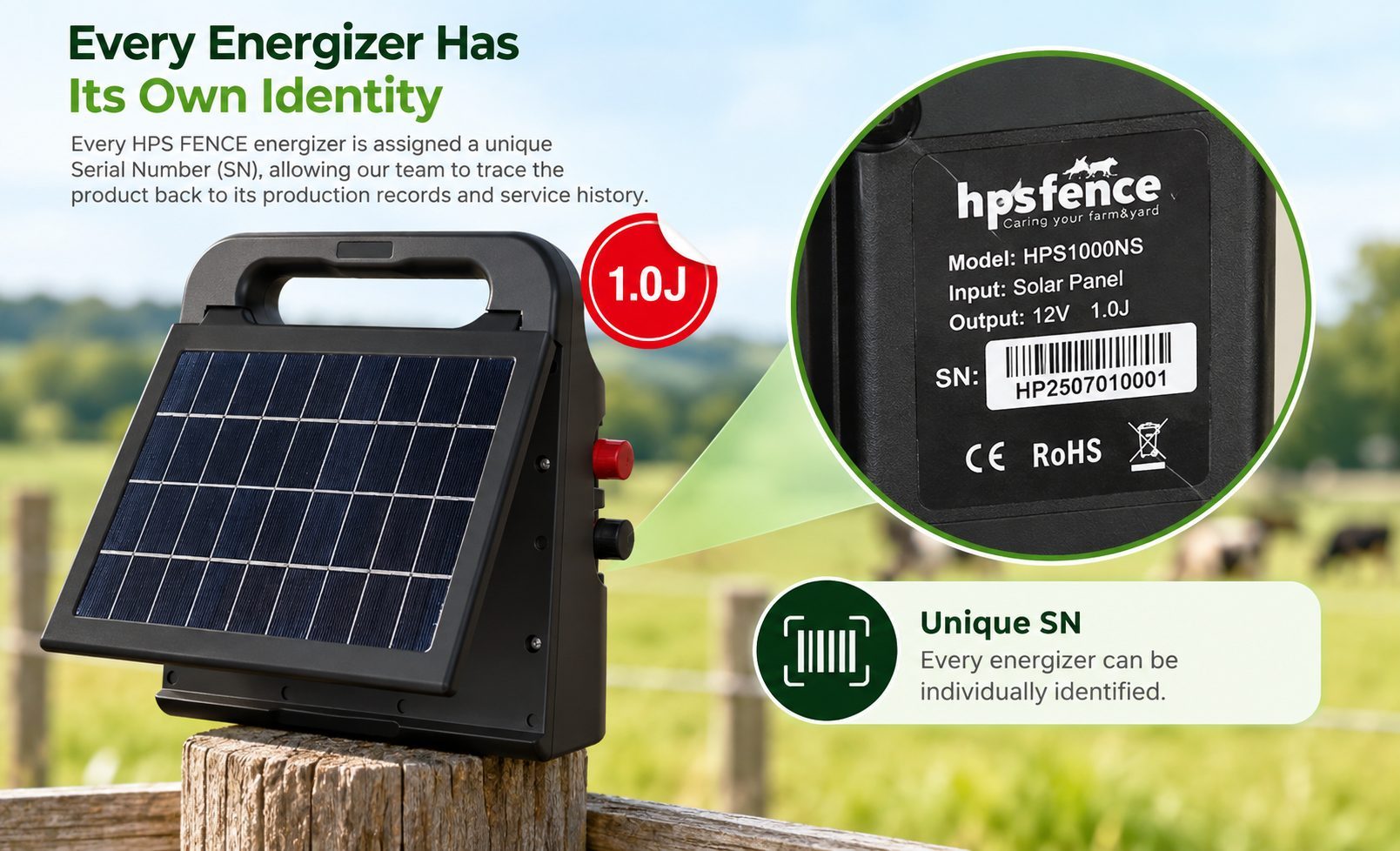
Voltage measures pressure; joules measure stored energy. A fence can read 7,000 V with almost no energy behind it and still fail to stop a determined animal. Use voltage as a health check and joules as the sizing decision.
| Fence reading | What it means |
|---|---|
| 6,000 V and above | Strong. Suitable for cattle and long runs. |
| 4,000–6,000 V | Workable for most livestock; recheck after heavy rain. |
| 2,000–4,000 V | Weak. Look for vegetation contact, broken wire or a poor earth. |
| Below 2,000 V | Fault condition. Animals will walk through it. |
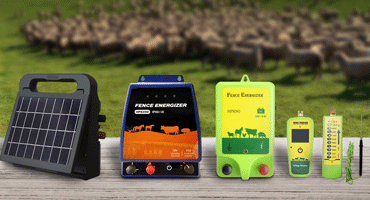
Six electric fence energizers for a first installation
Match the energizer to the species and the length of fence, then add margin for vegetation and weather. These six cover the common starting points in the HPS FENCE range; every unit carries a two-year warranty.

Entry · AC
0.13 J output · 110–240 V
Poultry netting, pets and garden plots on short clean runs.
View product details
Small stock · AC
0.5 J output · 110 V
Sheep and goats, with reserve for light vegetation.
View product details
Dual source
0.5 J · AC + 12 V
Keeps pulsing on battery when mains drops out.
View product details
Horses · AC/DC
3.5 J · 250 acres · 55 miles
Enough energy to train a horse on first contact.
View product details
Solar · small
0.5 J stored · 7,000 V peak
Off-grid backyard and pet containment, battery included.
View product details
Solar · large
6 J input · 3.6 J output · 60 miles
Remote pasture where mains power will never reach.
View product detailsElectric fence FAQ: common questions answered
Do electric fences work in dry soil or without rain?
They work, but less reliably. Dry, sandy or frozen soil raises resistance at the ground rod, so less current returns to the energizer. Adding rods and choosing a damp location for the earth array solves most dry-soil problems.
Can an electric fence kill an animal?
A compliant farm energizer is designed to startle, not injure. IEC 60335-2-76 caps output at 5 J and 10 ms, well inside the perception range described in IEC 60479-1. Deaths are associated with faulty equipment producing continuous current, or entanglement in conductive netting.
How long does an electric fence last?
Galvanised high-tensile wire and quality insulators commonly last fifteen to twenty years. Polywire and netting are consumables and typically last three to seven years depending on UV exposure and handling.
Do electric fences need a permit?
Rules vary by country and region, particularly where the public has access. Check local requirements for warning signage, fence height and separation from public paths before installing a boundary fence.
Is an electric fence cheaper than barbed wire?
Usually yes once installation is included. New Zealand MPI data puts a four-wire electric fence at NZD 6.56 per metre against NZD 13.02 for an eight-wire conventional fence on flat terrain. Barbed wire also carries a higher injury risk.
HPS FENCE · MANUFACTURER & WHOLESALE SUPPLIER
Your Trusted Partner for Electric Fencing & Farm Solutions
From electric fence energizers and fencing accessories to poultry farming equipment, HPS FENCE supports global distributors, wholesalers, importers, and brands with reliable products, flexible OEM/ODM customization, and long-term supply solutions.
Sources
- IEC 60335-2-76:2002+A1:2006 and BS EN IEC 60335-2-76:2021 — electric fence energizers: output energy ≤5 J, pulse duration ≤10 ms, repetition rate ≤1 Hz.
- New Zealand Ministry for Primary Industries — Stock Exclusion Costs Report: average installed fence cost per metre by type and terrain, from 52 fencing contractors across 15 regions.
- Government of Western Australia — Livestock management: fence location and grazing control (Water Note 18): material cost ranges per kilometre.
- Alberta Agriculture, Food and Rural Development — Protecting Livestock From Predation With Electric Fences: 90% reduction in sheep predation losses.
- Sapkota S. et al. — Economic Analysis of Electric Fencing for Mitigating Human-wildlife Conflict in Nepal, Journal of Resources and Ecology 5(3): 237–243, 2014.
- University of Colombo — Effectiveness of Electric Fences in Human-Elephant Conflict Areas, Sri Lanka.
- IEC 60479-1 — effects of current on human beings and livestock: perception and let-go thresholds.