




















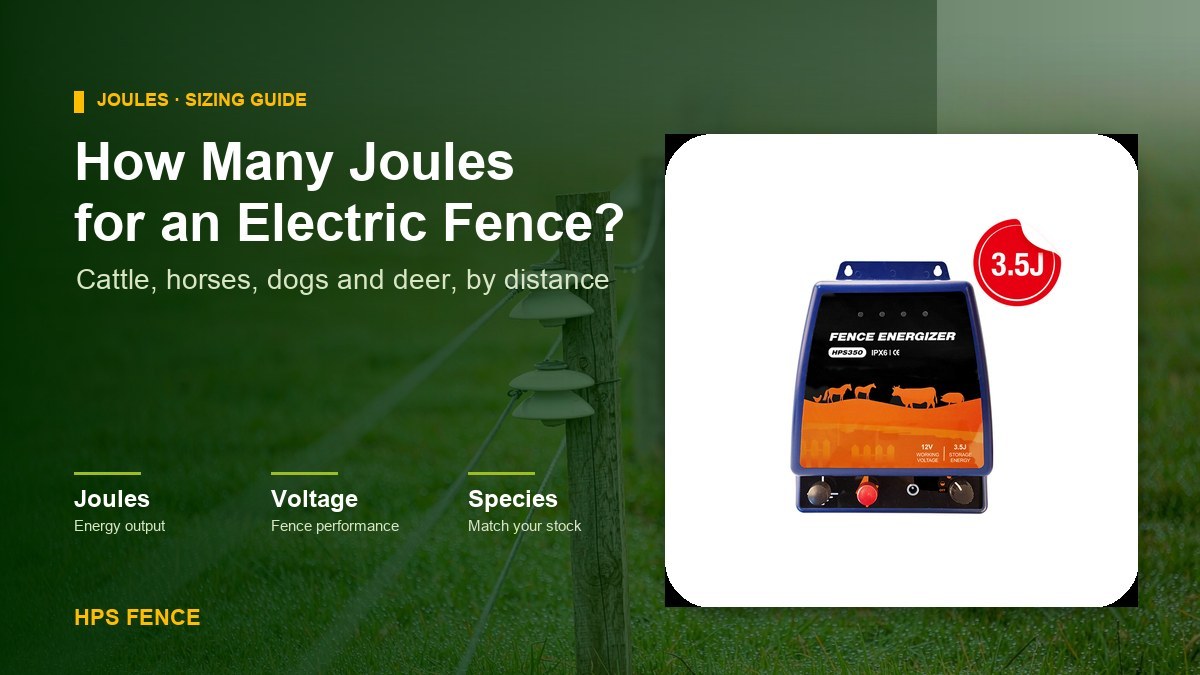
What Does Joule Mean on an Electric Fence Energizer?
A joule on an electric fence energizer is the energy released in one fence pulse: one joule equals one watt held for one second. A 1 J unit puts 1 J into the fence on each pulse, roughly once per second. Most labels quote stored energy, but the fence receives only about 50–60% of it — a 6 J model delivers about 3.6 J at the terminals.
Every energizer box carries a joule figure, and almost nobody explains what it counts. It is not the shock you feel, not the voltage on the wire, and not the watts the unit draws — it is the energy released in a single pulse, measured under a load that the standard defines. Get the definition wrong and a 12 J unit can underperform a 6 J one. This guide explains what the number means, why the stored and output figures differ by about 40%, and what a distributor should verify before quoting a joule class to a farm customer.
Quick facts
- 1 joule = 1 watt-second. It is energy, not voltage and not power — three different numbers on the same label.
- IEC 60335-2-76 limits every fence pulse to 5 J output, 10 ms duration and 1 Hz, measured into a 500 Ω standard load.
- Stored-to-output efficiency on HPS FENCE models measures 52–60%: 0.25 J becomes 0.13 J, 12 J becomes 7.2 J.
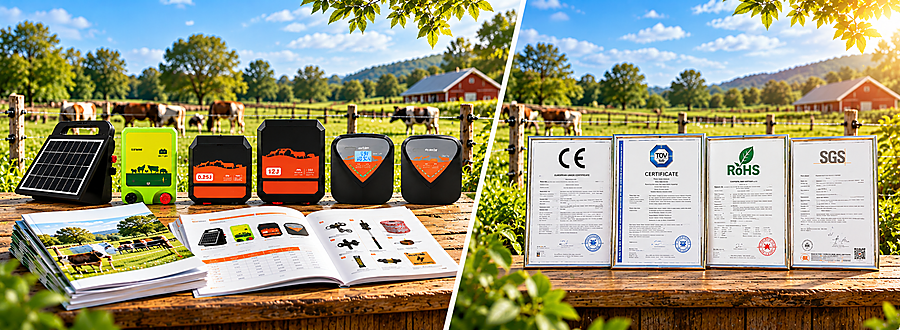
- MOQ is one unit on energizers and testers; CE / RoHS / TÜV / SGS, ISO 9001 and FCC, with a 2-year warranty.
What a joule measures on an electric fence energizer
A joule is the SI unit of energy: one newton-metre, or one watt of power sustained for one second. On an energizer, that energy is accumulated in capacitors between pulses and dumped into the fence in a burst of a few milliseconds. The joule figure is therefore a per-pulse quantity, not a rate.
This is where most spec-sheet arguments start. Buyers read four numbers on the same label and assume they measure the same thing. They do not.
| Parameter | Unit | What it tells you | What it does not |
|---|---|---|---|
| Peak voltage | V (kV) | Pressure pushing the pulse through hide, wool or grass | How much energy arrives — a high-voltage, low-energy pulse stings without lasting |
| Peak current | A (mA) | Flow during the pulse; the safety-relevant figure in IEC 60479-1 | Duration or total energy delivered |
| Power draw | W | What the unit consumes from mains or battery | Output per pulse; a 2.2 W unit can pulse at 2 J |
| Pulse energy | J | Work available in one pulse — the figure that loads up a weedy fence | Voltage at the far end, or how often the pulse repeats |
All four are read at the energizer terminals unless a coverage figure says otherwise. Voltage and energy are not interchangeable.
A practical consequence for dealers: if a customer asks for "more shock", they usually mean voltage, because voltage is what they feel through boots. If the real complaint is animals walking through grass-loaded wire, the fix is energy, not voltage. Quoting a 13 kV unit to solve a vegetation problem is a returns case waiting to happen. The joule figure is the one that survives a wet, overgrown paddock.
Stored joules vs output joules: where 40% disappears
Every energizer stores more energy than it delivers. The capacitors hold the charge; the transformer, the switching device and the output path consume part of it on the way to the terminals. The label can legally describe either figure, and many describe the larger one.
On HPS FENCE models the loss runs between 40% and 48%, which is typical for a transformer-coupled design:
| Model class | Stored (input) energy | Output at terminals | Efficiency | Peak voltage |
|---|---|---|---|---|
| 0.25 J | 0.25 J | 0.15 J | 60% | 6,000 V |
| 0.5 J | 0.5 J | 0.3 J | 60% | 8,000 V |
| 1 J | 1 J | 0.6 J | 60% | 9,000 V |
| 2 J | 2 J | 1.2 J | 60% | 9,000 V |
| 3.5 J | 3.5 J | 2.1 J | 60% | 9,000 V |
| 6 J | 6 J | 3.6 J | 60% | 10,000 V |
| 10 J | 10 J | 6.0 J | 60% | 10,000 V |
| 12 J | 12 J | 7.2 J | 60% | 10,000 V |
HPS FENCE published specifications, measured at the terminals into a resistive load. The method is documented on the real-output test page.
Bars show the stored rating; the arrow shows measured output at the terminals. A 40% internal loss is normal for transformer-coupled energizers — it is not a defect.
Two sentences on a spec sheet are worth more than the figure itself: "output energy, measured at the terminals into 500 Ω". Without that qualifier, the number could be a capacitor rating, a marketing round-up, or a measurement taken with no fence connected at all. HPS FENCE publishes both columns because a distributor quoting only the stored figure will lose the argument the first time a farmer puts a voltmeter on the far end of a 40 km run.
Why two 6 J energizers can perform differently
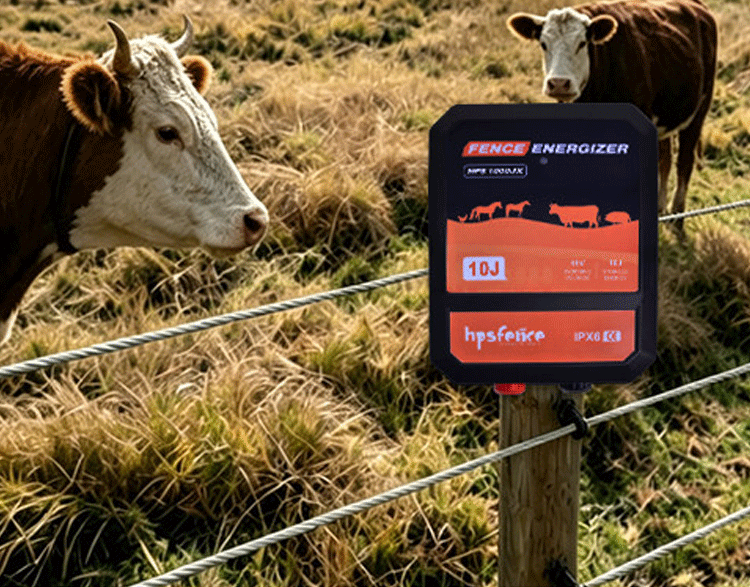
Joule is an absolute unit, but the measurement is not standardised across brands. Some manufacturers rate at 100 Ω, some at 500 Ω, some at 1,000 Ω, and some quote a near-open-circuit figure that describes almost no real fence. The load matters enormously: an energizer rated at 6 J into 100 Ω can measure well under 3 J into 500 Ω, because the pulse is being asked to push the same charge through five times the resistance.
IEC 60335-2-76 settles the argument for compliance testing by defining a standard load built from a non-inductive resistor of 50 Ω to 500 Ω, adjusted so the energy in the fixed element peaks, with pulse duration measured at 95% of the energy. Two units that both pass the standard are still not automatically comparable — only units measured at the same load are.
| What the label says | Underlying measurement | Real-world meaning |
|---|---|---|
| "12 J energizer" | Stored capacitor energy, no load stated | Probably 7 J or less at the terminals |
| "7.2 J output" | Measured at terminals, load unstated | Comparable only within one brand's test rig |
| "7.2 J output into 500 Ω" | Terminals, defined standard load | Directly comparable with any other 500 Ω rating |
| "Up to 50 miles" | Clean wire, dry ground, correct earth | Usually half that with vegetation contact |
The third line is the only one that can be checked against a competitor without a laboratory. Ask for it in writing.
For a distributor this is a commercial risk, not a technical curiosity. If the private-label unit is rated at 500 Ω and the competing import is rated open-circuit, the two look identical on a retail box while behaving differently on a farm. When the return comes back, the joule number will not explain it. The sizing guide explains which delivered figure each species actually needs, once the measurement basis is settled.
The IEC 60335-2-76 ceiling: 5 J, 10 ms, 1 Hz
The safety standard does not limit how much energy an energizer may store. It limits what may leave the terminals in one pulse:
| Parameter | Limit | Why it exists |
|---|---|---|
| Output energy per pulse | ≤ 5 J into the standard load | Keeps a shock painful but non-injurious; the threshold comes from IEC 60479-1 current-effect data |
| Pulse duration | ≤ 10 ms (95% energy) | Limits heating of tissue even when energy is within limits |
| Repetition rate | ≤ 1 Hz | Gives the animal or person time to let go between pulses |
| Peak current | ≤ 20 A cumulative over 200 µs at 500 Ω | Caps the instantaneous current path through a body |
Limits as specified in IEC 60335-2-76 and its EN adoption. Security-fence energizers carry additional clauses not covered here.
This is why "12 J" and "compliant" can both be true. The capacitor may store 12 J, the pulse may deliver 7.2 J into a fence, and the compliance test at 500 Ω may still return a figure inside 5 J. A unit that cannot make that distinction is either mislabelled or non-compliant, and both outcomes are a problem when customs or a notified body asks for the test report.
For buyers in the EU, UK, Australia and New Zealand, the practical check is simple: request the test report that states the load, the pulse duration and the measured energy. A supplier who cannot produce one is quoting a marketing number. HPS FENCE certification documentation is filed per model for exactly this reason.
How to read a joule figure in four checks
Before a joule number enters a quotation or a product listing, run these four checks. They take about five minutes and prevent most specification disputes.
- Stored or output? If the datasheet lists one figure only, assume stored. Ask for the terminal measurement and write the answer down.
- Measured at what load? 500 Ω is the compliance basis. A figure quoted at 100 Ω or open circuit will look better and travel worse.
- What pulse duration and peak voltage accompany it? A 5 J pulse at 10 ms and 9 kV behaves differently from 5 J at 1 ms and 13 kV — same energy, different sensation and different insulation requirement.
- Does the coverage claim assume clean wire? Nearly every published kilometre figure assumes dry conditions and no vegetation. Halve it for a weedy boundary before promising anything to a customer.
Dealers who run these four checks tend to standardise on one or two suppliers rather than a dozen. It is cheaper than handling a return from a farmer who bought on a box number.
Joule classes: what 0.25 J to 12 J actually drives
Once the measurement basis is clear, the class itself is a useful shorthand. The table below gives delivered energy, not stored, because that is what the fence sees.
| Stored class | Delivered (≈60%) | Typical fence | Buyer profile |
|---|---|---|---|
| 0.25 J | 0.15 J | Poultry netting, garden strip, pet enclosure | Smallholder, hardware retail |
| 0.5 J | 0.3 J | Short runs up to about 5 km, dry conditions | Lifestyle block, e-commerce seller |
| 1 J | 0.6 J | 10 km clean fence, sheep on dry ground | Mixed smallholding |
| 2 J | 1.2 J | 20 km, 20–50 head of cattle | Commercial farm, dealer core SKU |
| 3.5 J | 2.1 J | 30 km, 50–150 head, light vegetation | Working farm, contractor |
| 6 J | 3.6 J | 60 km, wooled sheep, moderate grass | Large holding, distributor volume line |
| 10 J | 6.0 J | 100 km, heavy vegetation, wildlife pressure | Station, reserve, security perimeter |
| 12 J | 7.2 J | 120 km, extreme length or elephant fencing | Project supplier, tender work |
Coverage figures assume clean wire, dry ground and a correct earth. Reduce by half for persistent vegetation contact.
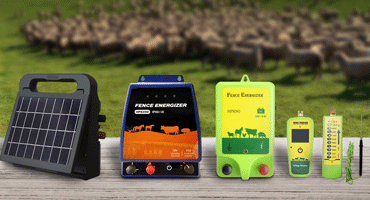
The class that earns the most shelf space in a distributor's catalogue is not the largest one. Across the four power formats — mains AC, 12 V DC, solar and AC/DC combination — the 2 J and 3.5 J models carry the widest enquiry base, while the 10–12 J units move on project and tender timelines. HPS FENCE builds all four formats from 0.25 J to 12 J, which is what makes a single-supplier range possible.
Wholesale electric fence energizers: joule range, MOQ and OEM
HPS FENCE is the export brand of Hangzhou Opus Fence Supplies Co., Ltd, manufacturing energizers in Hangzhou since 2013, with category experience dating to 2002. Output spans 0.25 J to 12 J across mains, battery, solar and AC/DC formats, sealed to IPX6, and shipped to distributors in Australia, New Zealand, Europe, the United States, Canada, South America, Korea and Japan.
For a wholesale electric fence energizer programme, the joule range is the first filter and the terms are the second. A joule class that cannot be backed by a test report is a listing risk in every regulated market; a joule class without flexible order terms is a stock risk in every small market.
Supply terms at a glance
Five energizers that cover the joule range
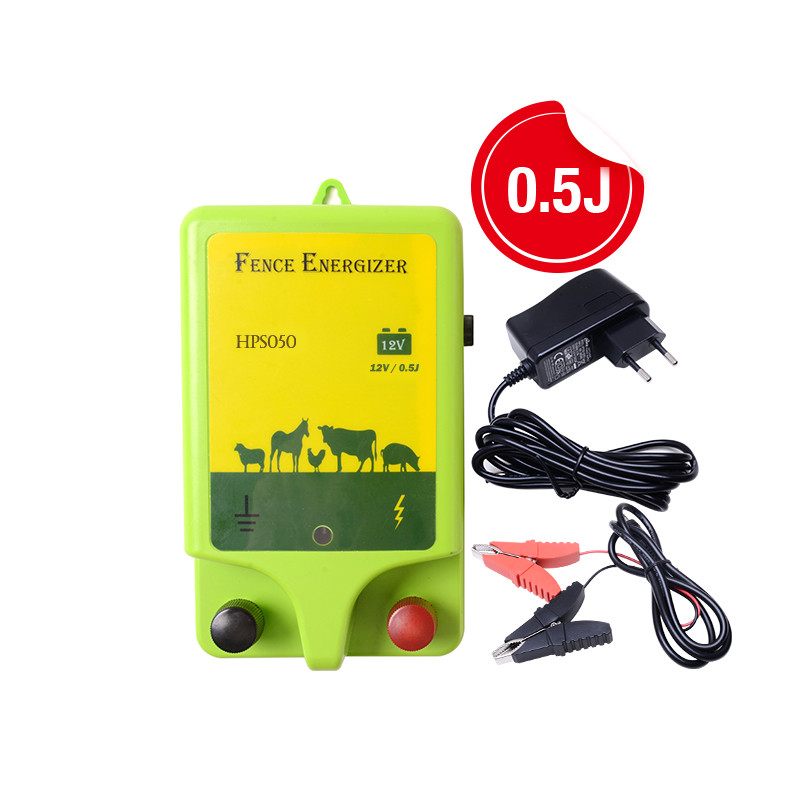
0.5 J dual source
0.5 J stored · 0.3 J delivered · 110–240 V AC or 12 V
The entry SKU for lifestyle blocks and small livestock runs.
View product details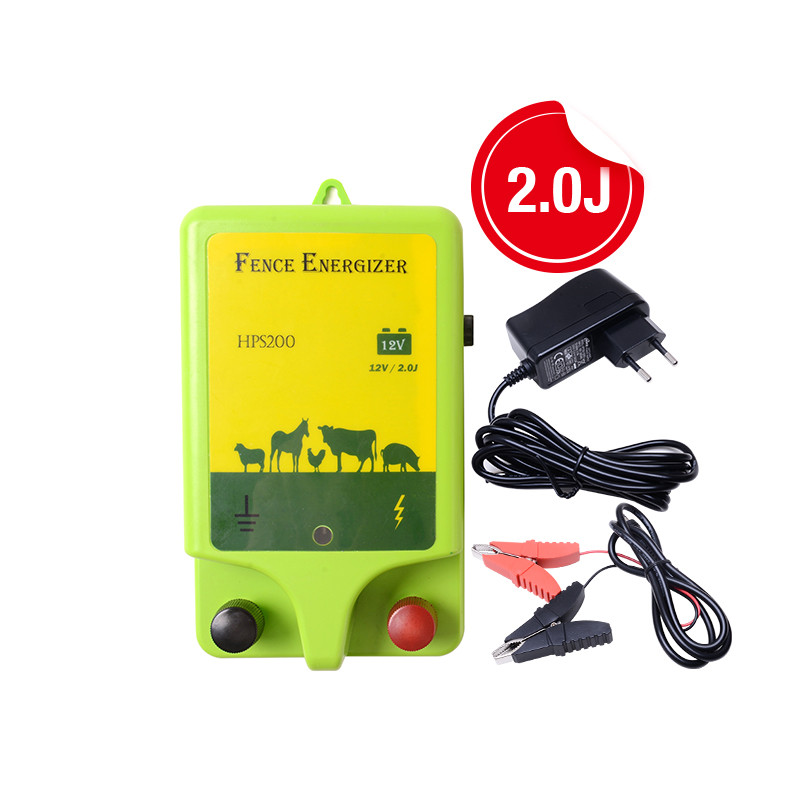
2 J dual source
2 J stored · 1.2 J delivered · 9 kV · AC or 12 V
The volume line: 20 km of fence, 20–50 head of cattle.
View product details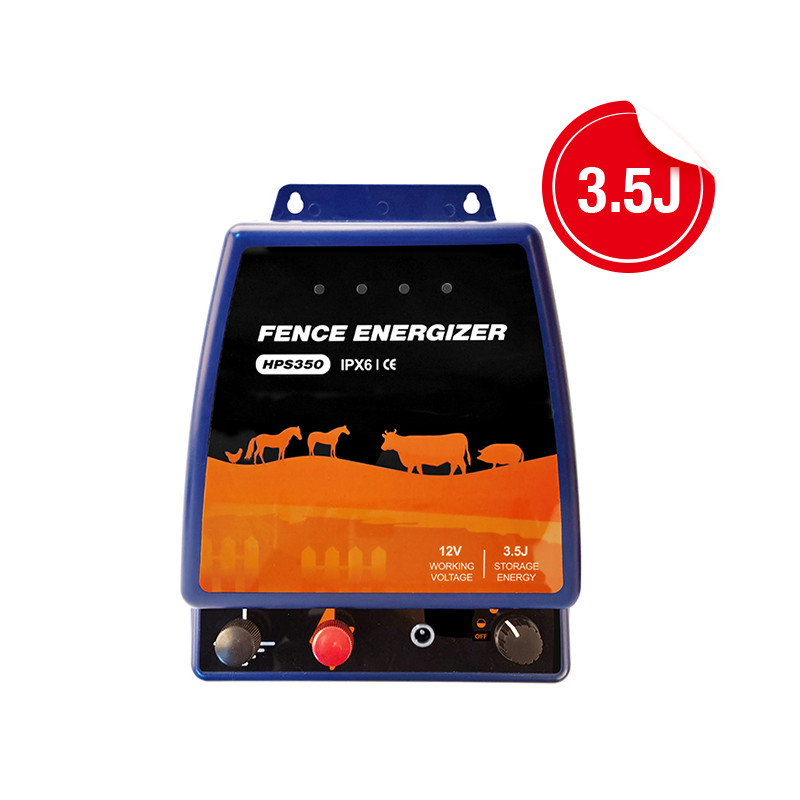
3.5 J workhorse
3.5 J stored · 2.1 J delivered · 30 km coverage
The default for multi-paddock grazing and mixed herds.
View product details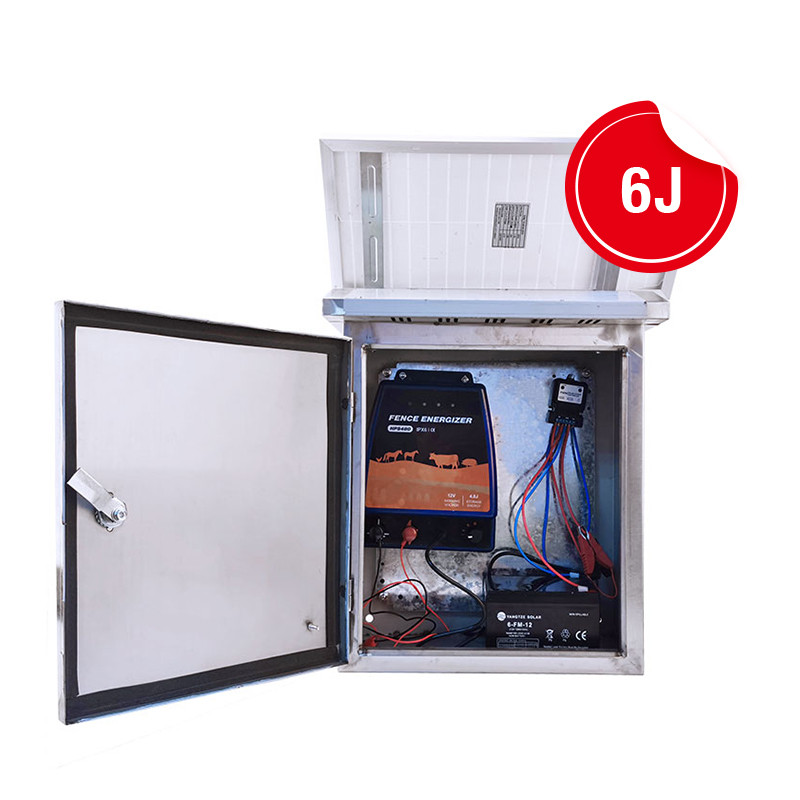
6 J solar
6 J stored · 3.6 J delivered · 60 km range
Off-grid cattle runs where a battery line has to self-charge.
View product details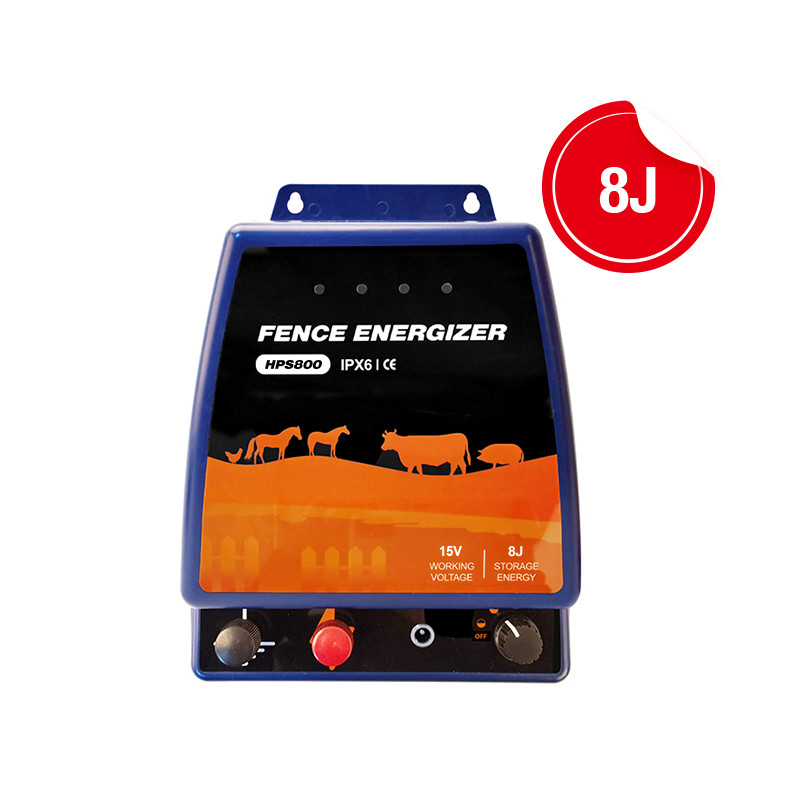
8 J high power
8 J stored · 4.8 J delivered · 13 kV · 80 km
Wildlife pressure, reserve boundaries and long weedy lines.
View product detailsHow the joule figure is verified before shipping
Stored and delivered figures measured at the terminals, with the method written down.
Read the test methodContinuous operation with output, energy and temperature monitored over the run.
See the production processPackaging verified for container and parcel transit before a model is released.
See the drop testVerification tied to production batches rather than a single prototype.
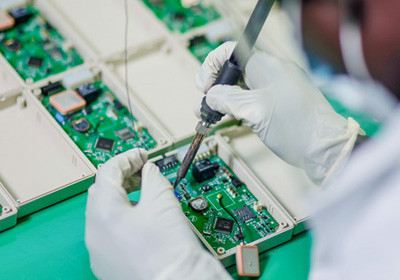
View certificationsEvery unit checked before packing, with batch traceability back to components.
Inspection stepsFrom specification to order
A joule figure that cannot be backed by a test report is a number, not a specification. If you are building a range and need stored and delivered figures for every model, a mixed-model trial order to check the packaging, or private-label manuals to match your market, the fastest route is to put your spec on the table and let us answer it line by line — send your joule and MOQ requirement here and we will reply with the model matrix and test data.
What a joule means on an energizer: FAQ
What does joule mean on an electric fence energizer?
A joule is the energy released in one pulse. One joule equals one watt sustained for one second, so a 2 J energizer puts about 2 J into the fence on every pulse, roughly once a second. It measures energy, not voltage: a 9 kV pulse and a 13 kV pulse can carry the same joules.
Is a 12 J energizer stronger than a 6 J one?
Only if both figures are measured the same way. Stored 12 J typically delivers about 7.2 J at the terminals, and stored 6 J about 3.6 J, so the 12 J unit is roughly double — but a 6 J unit measured at 500 Ω can outperform a 12 J unit measured open-circuit on a real fence.
Why does my energizer deliver less than its joule rating?
Because the rating is usually the stored capacitor energy. Transformer and switching losses consume 40–48% on a typical design, which is why a 6 J model delivers 3.6 J. The delivered figure is the one the fence sees.
What is the MOQ for wholesale electric fence energizers?
One unit for energizers, testers and coop doors, and 100 units for other categories. Mixed-model orders are accepted, so a distributor can open with four joule classes in a single shipment and reorder by model.
Can you produce private label energizers with our joule specifications?
Yes. Private label covers logo, retail packaging, manuals and model naming, with multilingual manuals supported. A new joule rating or a different housing is quoted as a custom project with its own MOQ, confirmed per specification rather than assumed.
References
- IEC 60335-2-76 — Household and similar electrical appliances, Part 2-76: Particular requirements for electric fence energizers — output energy ≤5 J, pulse duration ≤10 ms, repetition rate ≤1 Hz, 500 Ω standard load.
- IEC 60479-1 — Effects of current on human beings and livestock — current-time thresholds behind the pulse energy limit.
- Southwest Power Fence — Energizer performance and general information — the variability of joule ratings by test load (100 Ω, 500 Ω, 1,000 Ω, open circuit).
- HPS FENCE — How to test real energizer output — measured stored-to-delivered efficiency across the range.
- HPS FENCE certifications — CE / RoHS / TÜV / SGS, ISO 9001, FCC documentation per model.