






Solar Electric Fence Chargers: The Complete Wholesale Guide for 2026 Market Trends
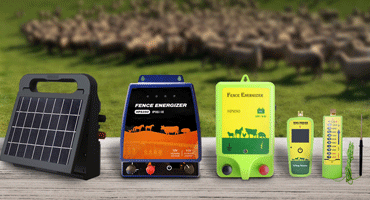
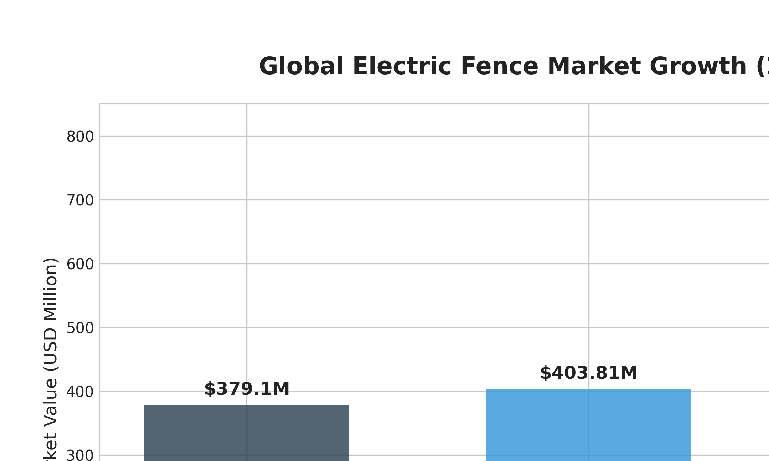
The global agricultural landscape is undergoing a profound transformation. Driven by the convergence of rising energy costs, expanding off-grid farming operations, and a worldwide push toward sustainable practices, the solar electric fence charger wholesale market has become one of the most strategically important product categories for distributors, farm supply chains, and e-commerce sellers entering 2026. This guide provides a rigorous, data-backed analysis of the market forces at play, the technical specifications that separate premium products from inferior ones, and the sourcing criteria that will determine your competitive edge. The numbers tell a compelling story. According to SNS Insider's 2026 market report, the global electric fence market was valued at $379.10 million in 2025 and is projected to reach $724.99 million by 2035, growing at a CAGR of 6.72%. The solar power source segment is the fastest-growing sub-segment at 10.33% CAGR. Global Electric Fence Market (2025): $379.10M to $724.99M by 2035 Overall CAGR (2026-2035): 6.72% Solar Power Source Sub-segment: Fastest-growing, 10.33% CAGR Agriculture Application Share: 55.30% (dominant) Portable Fence Segment: 9.46% CAGR (rotational grazing) North America (US): Largest region, 78.35% of NA US Electric Fence Market (2025): $103.36M to $166.07M by 2035 According to the USDA, electric fencing incorporated into rotational grazing systems can improve pasture utilization efficiency by up to 40% compared with open grazing, a statistic that resonates powerfully with commercial ranchers evaluating the ROI of upgrading their fencing infrastructure. For B2B buyers seeking the best solar fence charger for resale, understanding the end-user's purchasing motivation is the foundation of a successful product strategy. Three macro-drivers are consistently cited across industry research and farmer surveys: When placing solar powered electric fence energizer bulk orders, the first architectural decision is between integrated and modular systems. All-in-One Integrated Units combine the solar panel, charge controller, battery and energizer circuitry into a single weatherproof housing, ideal for rotational grazing, temporary paddocks and e-commerce customers. Separate Panel and Battery Systems connect a standalone energizer to an external solar panel (typically 20W to 50W) and a high-capacity deep-cycle battery, preferred by professional ranchers managing multi-mile fence lines. The low-joule segment (0.25J-1J) is the highest-volume category in the e-commerce channel. Amazon data indicates that solar fence chargers in this category generate an estimated 2,500 to 3,500 weekly unit sales on the platform alone, with an average selling price of $55 to $120, making this segment an excellent entry point for new distributors. A widely cited industry guideline is that a 1-joule energizer requires a minimum 10W to 20W solar panel for reliable daily recharging. High-quality monocrystalline silicon panels, offering conversion efficiencies of 18% to 22%, are strongly preferred for agricultural applications. Deep-cycle AGM batteries are the industry standard, while LiFePO4 batteries offer 2,000+ cycles vs 300-500 for AGM, delivering significantly longer cycle life for variable climates. Premium-standard products (IP65, -40C to +70C, advanced surge protection) are essential for markets with extreme climates, such as the Canadian prairies, the Australian outback, and the American Southwest. A reputable solar fence charger manufacturer China can offer significant cost advantages, but only when selected through a rigorous vetting process. Factories with vertically integrated manufacturing generally offer shorter lead times and better quality control. Standard lead times for bulk orders typically range from 30 to 60 days, extending during peak agricultural seasons. Private labeling is the primary mechanism through which distributors build brand equity, and a capable wholesale solar fence energizer manufacturer should offer custom branding, packaging design and multi-language support. Regulatory compliance is a market entry requirement. The European Union requires CE Mark, RoHS and WEEE; the United States requires FCC Part 15 and UL; Australia and New Zealand require the RCM Mark; Canada requires IC; and the United Kingdom requires the UKCA Mark. Before placing any bulk order, request copies of all relevant test reports and certificates and verify their authenticity with the issuing certification body. HPSFENCE's solar lineup covers 0.25J to 12J with high-efficiency monocrystalline solar panels, deep-cycle AGM or LiFePO4 battery options, and IP65-rated weatherproof housings. Our advanced charge controllers deliver the 14 to 21 Autonomy Days that professional buyers require. We export to the world's most demanding agricultural markets, certified for North America (FCC, UL), Europe (CE, RoHS), Australia and New Zealand (RCM), and the UK (UKCA), with OEM and ODM services delivering custom-branded products with competitive lead times. The solar electric fence market is growing at nearly 10% annually. Our B2B team typically responds within 24 hours. Tell us your target market, required joule range, and annual volume, and we will provide a tailored product and pricing proposal. Email: hpsfence@gmail.com | Website: www.hpsfence.com References: SNS Insider, Reliable Research Times, ShelfTrend, FenceFast, Elife Fence, International Energy Agency (IEA) Renewables 2025.Solar Electric Fence Chargers: The Complete Wholesale Guide for 2026 Market Trends
Why Solar Electric Fence Chargers Are Dominating the 2026 Market
Types of Solar Electric Fence Chargers Available for Wholesale
Technical Specifications That Matter for B2B Buyers
Comparing Solar Charger Suppliers: What to Look For
Why Partner with HPSFENCE for Your Solar Fence Charger Line
Ready to Build Your Solar Fence Charger Brand?