





How to Source Electric Fence Energizers for Germany: EU Compliance and Dealer Terms
A German dealer evaluating a new fencing line asks four questions before talking about price: can this supplier document EU conformity, what is the minimum order, who holds the EU responsible-person role, and what happens when a unit fails in year two. This guide answers those four in the order a German buyer actually asks them, and sets out what HPS FENCE can and cannot supply today.
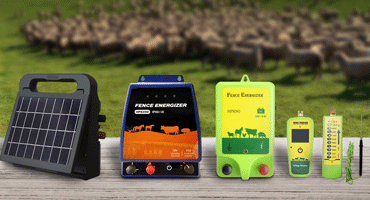
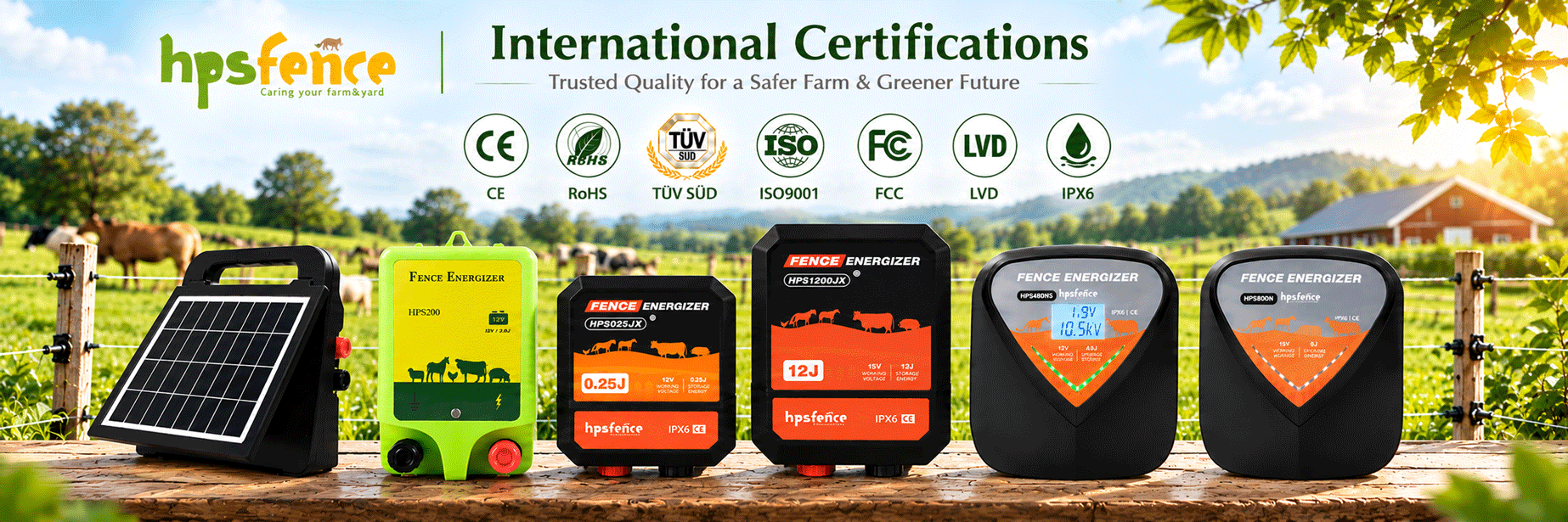
To import electric fence energizers into Germany you need, per model: an EU Declaration of Conformity, test reports against EN 60335-2-76 and EMC standards, RoHS evidence, German operating instructions, traceability labelling, and an EU-established economic operator under GPSR (EU) 2023/988. HPS FENCE holds CE, RoHS, TÜV and SGS certification with ISO 9001, manufactures from 0.25 J to 12 J across AC, AC/DC, battery and solar, and ships standard energizers from one unit with a 2-year warranty.
Quick facts
- Mains-powered energizers typically fall under LVD 2014/35/EU, EMC 2014/30/EU and RoHS 2011/65/EU.
- GPSR (EU) 2023/988 has applied since 13 December 2024 and requires an EU-established responsible person.
- HPS FENCE holds CE, RoHS, TÜV and SGS certification, plus ISO 9001 and FCC.
- Standard energizers ship from one unit; custom specifications are quoted per project with a 2-year warranty.
What German dealers need before importing electric fence energizers
Four gates stand between a purchase order and a product on a German shelf. They are sequential, and failing any one stops the launch.
- Product compliance. The energizer must carry CE marking supported by a Declaration of Conformity and a technical file — not a certificate from a testing house alone.
- German-language labelling and instructions. Safety information and operating instructions must be in German, with model, batch and manufacturer traceability.
- An EU economic operator. Under GPSR and Regulation (EU) 2019/1020, a non-EU manufacturer needs an EU-established entity responsible for the product. In a direct-import arrangement this is usually the German importer.
- Take-back and packaging obligations. WEEE registration for electrical equipment and VerpackG/LUCID registration for packaging sit with the German entity placing the goods on the market.
None of these are exotic. They are the standard file a German buyer requests in the first email — which is exactly why a supplier who cannot produce them quickly is eliminated before price is discussed.
Which EU directives apply to an electric fence energizer
An energizer is not covered by one regulation. It is covered by several at once, and the Declaration of Conformity must list all of them.
| Instrument | Applies to | What it demonstrates |
|---|---|---|
| LVD 2014/35/EU | Mains-powered units, 50–1,000 V AC input | Electrical safety of the mains side |
| EMC 2014/30/EU | All energizers with electronic switching | Emission and immunity performance |
| RoHS 2011/65/EU | All electrical and electronic equipment | Restriction of ten hazardous substances |
| GPSR (EU) 2023/988 | Consumer products, since 13 Dec 2024 | Safety, traceability, EU responsible person |
| Reg. (EU) 2019/1020 | All products under EU harmonisation law | Market surveillance contact point in the EU |
| WEEE 2012/19/EU | Electrical and electronic equipment | Take-back and recycling obligations |
| Battery Reg. (EU) 2023/1542 | Units supplied with a battery | Battery labelling, documentation, due diligence |
| VerpackG (Germany) | Retail and shipping packaging | LUCID registration and licensing |
The technical standard behind the CE marking for this product category is EN IEC 60335-2-76, the European adoption of IEC 60335-2-76, which limits output energy, pulse duration and repetition rate. A test report citing that standard, together with the general EN 60335-1 safety standard, is the document a German buyer recognises immediately.
The compliance documentation package a German dealer should request
This is the list we recommend a German dealer puts into the first email. Requesting it in one block saves weeks of back-and-forth.
| # | Document | Issued by / note |
|---|---|---|
| 1 | EU Declaration of Conformity, per model | Manufacturer, listing every applicable directive |
| 2 | Safety test report to EN IEC 60335-2-76 and EN 60335-1 | Accredited laboratory |
| 3 | EMC test report | Accredited laboratory |
| 4 | RoHS test report or material declaration | Laboratory or supplier declaration |
| 5 | Battery documentation (sealed lead-acid units) | Transport classification and safety data sheet |
| 6 | Product label artwork | Model, batch, manufacturer, EU responsible person |
| 7 | German operating instructions | Translation of the approved manual |
| 8 | Technical file and risk assessment | Required under GPSR for the EU operator |
| 9 | Traceability and batch records | Links the unit to its production run |
| 10 | Packaging registration evidence | LUCID number held by the German importer |
| 11 | WEEE registration | Held by the German importer or distributor |
| 12 | Spare parts list and written warranty terms | Manufacturer |
CE marking, RoHS and the EU Declaration of Conformity for electric fence energizers
These three are routinely confused, and the confusion causes delays at customs and on marketplaces.
CE marking is a self-declaration, not a certificate issued by an authority. The manufacturer declares that the product meets every directive that applies to it, and supports that declaration with a technical file. A test report alone is not CE marking.
The EU Declaration of Conformity is the document that makes the declaration formal. It names the manufacturer, the product and model, the directives applied, the standards used, and the authorised signatory. German buyers and market surveillance authorities ask for this document first, because it is the legal instrument, not the evidence behind it.
RoHS is a separate restriction on ten substances — lead, mercury, cadmium, hexavalent chromium, PBB, PBDE and four phthalates. It is proved by material testing or supplier declarations, and it sits alongside the safety file rather than inside it.
FCC is not an EU document
FCC certification is a United States requirement. It is useful for American distribution but carries no weight with a German market surveillance authority. If a supplier presents FCC as evidence of EU compliance, treat the rest of the file with caution.
EU responsible person, batteries and WEEE: the items German buyers forget
Three obligations sit outside the CE file and are the most common cause of a stalled first shipment.
The responsible person. Since 13 December 2024, GPSR requires an EU-established economic operator for consumer products placed on the market by a non-EU manufacturer. That entity must be identifiable on the product or packaging, hold access to the technical file, and cooperate with authorities. In a direct-import model, the German dealer is normally that entity — which means the dealer needs the manufacturer's technical file, not just a certificate.
Batteries. Solar energizers ship with sealed lead-acid batteries. Those units need transport classification documentation and a safety data sheet, and under the Battery Regulation they carry labelling and documentation obligations. Ask for the battery documentation before booking freight, not after.
WEEE and packaging. WEEE registration is held by the entity placing the equipment on the German market. Packaging falls under VerpackG with LUCID registration. Neither can be satisfied by the Chinese manufacturer alone, and both are frequently discovered late.

Solar electric fence energizers for the German market
Germany's dealer demand clusters around three buyer types: horse owners with small paddocks, part-time farmers with sheep or goats, and smallholder poultry keepers. Solar units suit all three because paddocks are frequently rotated and mains power is rarely available at the fence.
Two specifications matter more than the headline joule figure for this market. First, delivered output rather than input rating — our solar range delivers roughly 60% of its input figure, so a 6 J unit delivers 3.6 J and should be sold as such. Second, low-temperature behaviour: lead-acid capacity falls in winter, so a unit sized exactly to summer demand will underperform in January.
| Buyer type | Recommended output | Typical HPS model | Why |
|---|---|---|---|
| Horse owners, small paddock | 2–3.5 J delivered | HPSS350 / HPS350 | Holds voltage on tape fencing with visible conductors |
| Sheep and goats | 2.1–3.6 J delivered | HPSS350 / HPSS600 | Wool and coat require a stronger pulse |
| Poultry and smallholders | 0.25–1 J | HPS100S | Netting is short; 8,000 V peak handles wet grass |
| Cattle, part-time farms | 3.6–4.8 J delivered | HPSS600 / HPSS800 | Longer runs with vegetation pressure |
Electric fence energizer dealer terms for Germany: MOQ, trial orders and territory
Commercial terms decide whether a partnership starts. These are ours, stated plainly.
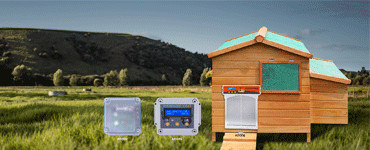
- MOQ: one unit for energizers, testers and coop doors; 100 units for other product categories.
- Trial orders: small-batch and mixed-model orders are accepted, so a first container can test several SKUs rather than one.
- Territory: regional protection and customer registration are part of our distributor programme; the specific arrangement is agreed per market and confirmed in the distribution agreement.
- Direct sales: we supply through distributors and do not run a consumer store in Germany — a point worth confirming in writing during negotiation.
- Pricing: dealer price list and recommended retail prices are issued with the quotation, since freight and volume change the landed cost.
Payment terms, freight cost and delivery time depend on the shipping method and order size; they are quoted together rather than published as a fixed schedule.
Electric fence energizer warranty, spare parts and German-language documentation
A 2-year warranty is only meaningful if the parts exist. Our spare-parts range covers the components that fail in service: replacement sealed lead-acid batteries in 6 V 7 Ah and 12 V 12 Ah, solar charge controllers rated 3 A, 5 A and 10 A, and galvanised ground rods. That means a dealer can resolve a battery failure locally instead of shipping a whole unit back.
Documentation is handled in the same way. Private-label programmes cover logo, packaging and manuals, and multilingual manuals are supported — which is how a German-language instruction sheet is produced without the dealer translating it themselves. Warranty claims follow the process published on our after-sales page, and the written terms can be attached to the distribution agreement.
Why HPS FENCE as an electric fence energizer manufacturer for German dealers
HPS FENCE is the brand of Hangzhou Opus Fence Supplies Co., Ltd, a China-based manufacturer of electric fence energizers founded in Hangzhou in 2013. The company's roots in farm and pasture products go back to 2002, and its founder began international trade in 2003. Output runs from 0.25 J to 12 J across mains, AC/DC, battery and solar formats, all rated IPX6.
Test data we publish
Real output test method published, not only a label rating.
Read the test methodLong continuous running before shipment to verify reliability.
See the production processPackaging validated for container and parcel handling.
See the drop testIngress protection verified per batch.
View certificationsEvery unit checked before packing, with batch records.
Customisation optionsSolar energizer models for German dealers
Six models cover the range a German dealer is most likely to stock. Specifications are taken from current product data, including delivered output where the manufacturer publishes it.
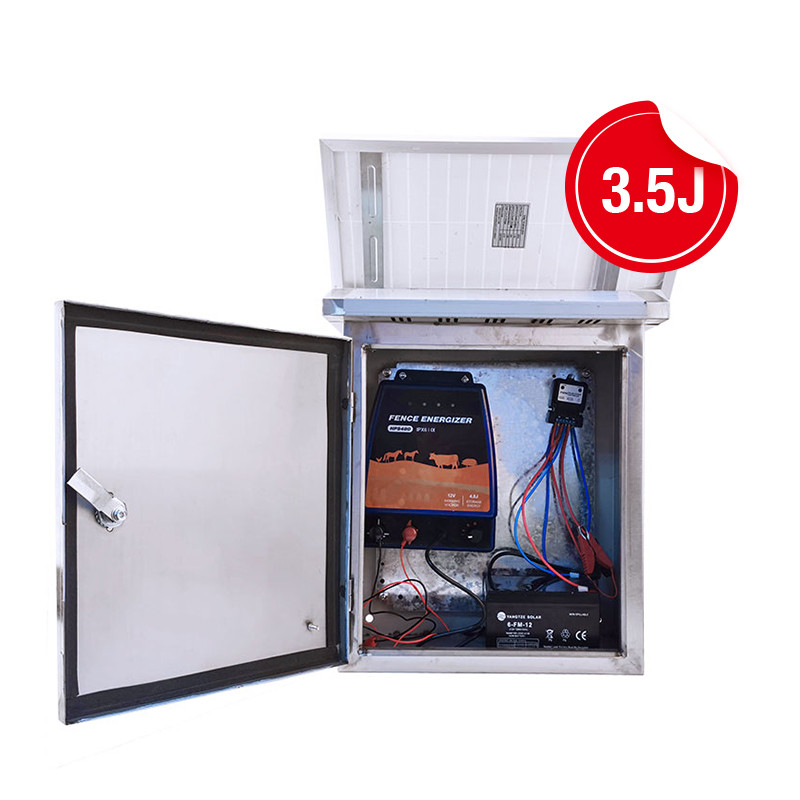
3.5 J input / 2.1 J output
2.1 J delivered · solar 12 V · 30-mile range · 2-year warranty
The horse and sheep specification for paddocks without mains power.
View product details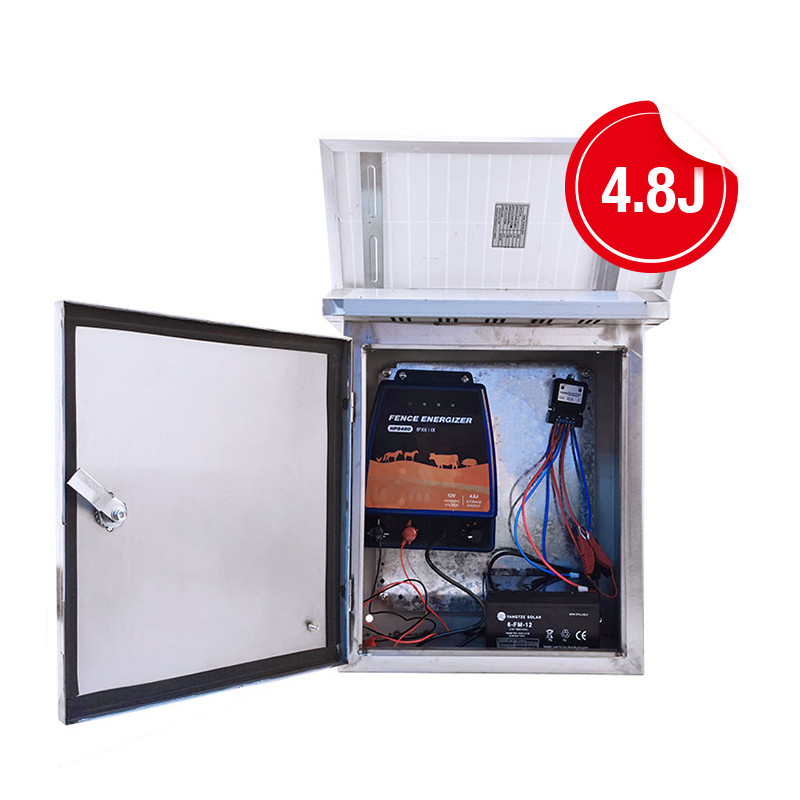
4.8 J input / 2.8 J output
2.8 J delivered · solar 12 V · 35-mile range · 2-year warranty
The step up for larger sheep flocks and mixed grazing.
View product details
6 J input / 3.6 J output
3.6 J delivered · solar 15 V · 60-mile range · 2-year warranty
Long runs and vegetation pressure on part-time farms.
View product details
1 J solar / 8,000 V peak
1 J stored · 8,000 V peak · 6 V 7 Ah battery · 2-year warranty
Poultry netting and smallholder plots.
View product details
3.5 J AC/DC for horses
3.5 J output · 250 acres · 55 miles · 2-year warranty
Where mains or battery power is available and runs are long.
View product details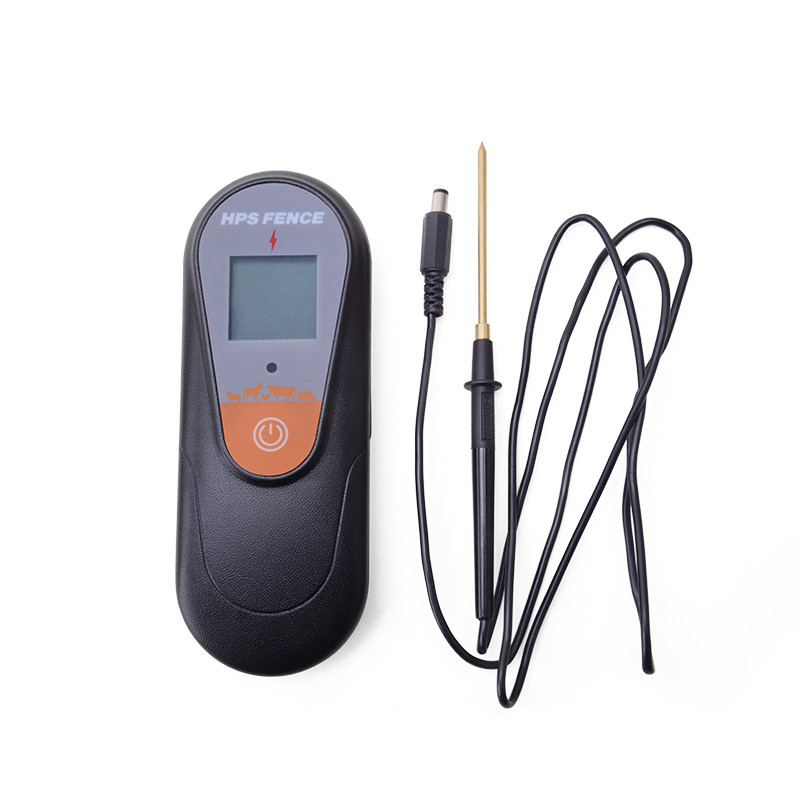
Digital fault-finding tester
0–13 kV · LCD display · 9 V battery · 1-year warranty
Attach one to every dealer's first order to cut support calls.
View product detailsElectric fence energizer supplier FAQ for German dealers
Do you already have electric fence distributors in Germany?
We sell through distributors and do not run direct-to-consumer sales in Germany, and current coverage varies by region. Territory availability is confirmed in writing before a dealer agreement is signed, so an existing partner is never undercut by a new appointment.
Can a German dealer start with a trial order of electric fence energizers?
Yes. Energizers, fence testers and coop doors start from one unit and mixed-model orders are accepted, so a first shipment can test five or six SKUs. Trial orders ship with the same certification pack as volume orders.
Who is the EU responsible person under GPSR for electric fence energizers?
In a direct-import arrangement the German importer normally becomes the EU economic operator responsible for the product under Regulation (EU) 2023/988, in force since 13 December 2024. The name and address must appear on the product or its packaging, so this is confirmed in writing before the first shipment.
Is an EU Declaration of Conformity issued per electric fence energizer model?
Yes. The DoC is issued per model and supplied with the certification pack for the models in your order, together with the EN IEC 60335-2-76 test report. The signatory on the DoC must be the manufacturing entity, which is the first detail a German buyer checks.
Can electric fence energizer manuals and packaging be supplied in German?
Yes. Private label covers the retail box, housing label and manual, and manuals can be produced in German alongside English, French and Spanish. Packaging can also carry the LUCID registration number required under the German VerpackG.
HPS FENCE · MANUFACTURER & WHOLESALE SUPPLIER
Your Trusted Partner for Electric Fencing & Farm Solutions
From electric fence energizers and fencing accessories to poultry farming equipment, HPS FENCE supports global distributors, wholesalers, importers, and brands with reliable products, flexible OEM/ODM customization, and long-term supply solutions.
Sources
- Directive 2014/35/EU (Low Voltage Directive) — electrical safety for equipment rated 50–1,000 V AC.
- Directive 2014/30/EU (Electromagnetic Compatibility).
- Directive 2011/65/EU (RoHS) as amended by (EU) 2015/863 — ten restricted substances.
- Regulation (EU) 2023/988 (General Product Safety Regulation), applicable from 13 December 2024.
- Regulation (EU) 2019/1020 — market surveillance and economic operator requirements.
- Directive 2012/19/EU (WEEE) and Regulation (EU) 2023/1542 (Batteries).
- EN IEC 60335-2-76 — particular requirements for electric fence energizers; EN 60335-1 — general safety requirements.
- HPS FENCE certification page — CE / RoHS / TÜV / SGS records (hpsfence.com/comm08).