







How to Choose a Reliable Electric Fence Energizer Manufacturer for the European Market
Comparing electric fence energizer manufacturers is not a price exercise. Two suppliers can quote the same 6 J unit at similar cost while one is a factory with a test bench and the other is a trading desk reselling an unknown line. The difference shows up six months later, when a batch fails in the field and nobody can produce a test record. This guide sets out the checks a European buyer can run before placing a first order.
Check seven things before you compare prices: whether the supplier owns a factory, whether they can show measured output rather than a label rating, whether the name on the EU Declaration of Conformity matches the manufacturing entity, whether they test every batch, what the real MOQ and trial-order terms are, how warranty claims are executed, and whether spare parts exist as catalogue items. A manufacturer that cannot answer all seven in writing is a reseller, a risk, or both.
Quick facts
- A compliant energizer is capped at 5 J, 10 ms and 1 Hz under IEC 60335-2-76 — the rating on the box is not the rating at the terminal.
- Delivered output typically runs at 58–60% of the input figure across our solar range.
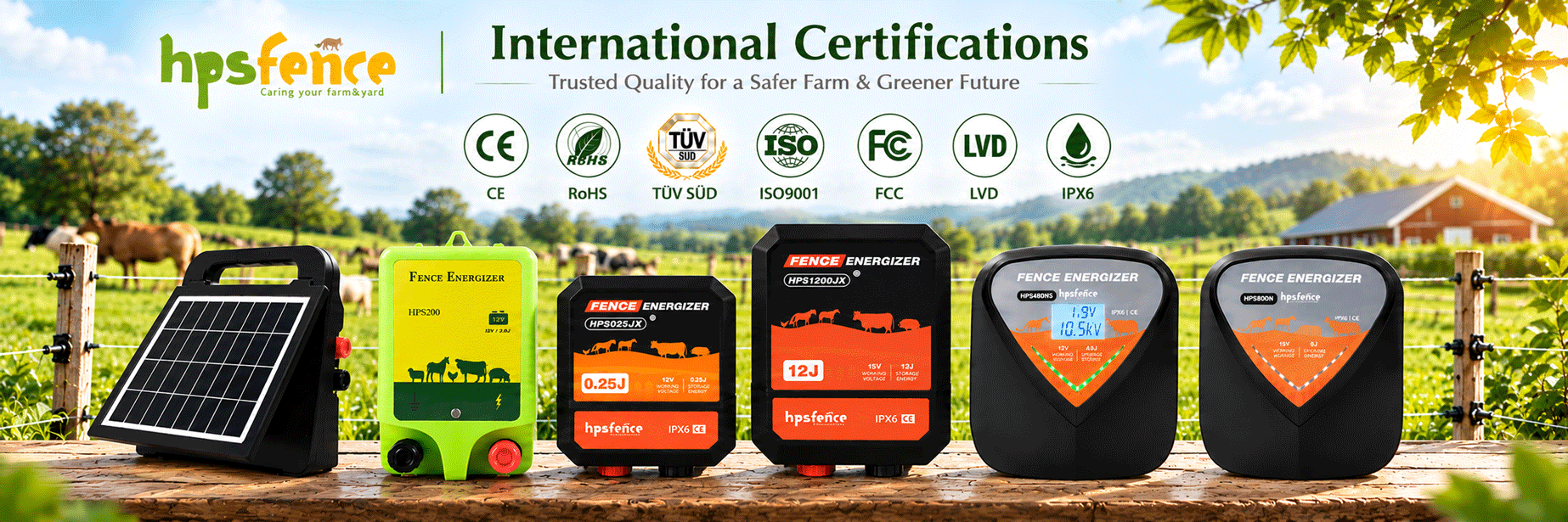
- HPS FENCE holds CE, RoHS, TÜV and SGS certification plus ISO 9001, and publishes its output test method.
- Standard energizers ship from one unit, so a trial order is possible before a container commitment.
Why electric fence energizer manufacturer selection goes wrong
Most sourcing failures are not caused by bad products. They are caused by buying a product nobody can trace. The pattern repeats across markets: a buyer compares quotations, selects the lowest landed cost, receives a container, and discovers three months later that the units in the second batch behave differently from the samples.
The root cause is that "manufacturer" is an unverified claim. Any trading company can present a factory video, and any factory can present a competitor's certificate. Verification therefore has to be structural rather than visual: who signs the declaration, who owns the test equipment, who holds the warranty obligation.
Manufacturer or trading company? Seven checks before you request a quote
| # | Check | What a real manufacturer shows | What a reseller cannot |
|---|---|---|---|
| 1 | Legal entity and factory address | Business licence matching the declared factory location | A virtual office or a forwarding address |
| 2 | Production ownership | Line video, SMT or assembly equipment, staff on site | Stock photos and a warehouse |
| 3 | Test capability | In-house joule and dielectric test bench, with records | "Tested by our partner" |
| 4 | Declaration of Conformity signatory | The manufacturing entity is named on the DoC | An unrelated brand name or a blank template |
| 5 | Model continuity | The same model number across batches, with revision records | Model numbers that change with each shipment |
| 6 | Spare parts catalogue | Batteries, controllers and rods listed as orderable items | "We can source it if needed" |
| 7 | Warranty execution | Written terms and a defined claim process | A verbal two-year promise |
Three of these can be confirmed from documents alone, without a factory visit: the DoC signatory, the spare-parts catalogue, and the written warranty terms. Ask for those first — they filter the list faster than any video call.
How to verify real joule output from an electric fence energizer manufacturer
The joule figure is the most abused number in this category. Some suppliers quote stored energy — what the capacitor holds — while others quote delivered output, which is what actually reaches the fence. The gap is not small: across our solar range, delivered output lands at 58–60% of the input figure.
Three questions expose the difference in a single email. First: "Is this figure stored or delivered?" Second: "Can you send the measurement method?" Third: "What load resistance is it measured into?" A compliant energizer is specified at a 500 Ω load under IEC 60335-2-76. A supplier who cannot name the load condition is quoting a marketing number.
The test a supplier should be able to demonstrate
Connect the energizer to a resistive load, capture the pulse with an oscilloscope, integrate energy over the pulse duration, and record the result per unit or per batch. If a factory cannot describe that process, it is assembling rather than engineering.
What the CE Declaration of Conformity reveals about the manufacturer
The DoC is the single most informative document in the pack, because it cannot be borrowed. It names the manufacturer, the product, the model, the directives applied, the standards used and the signatory. If the name on the DoC is not the entity you are buying from, you are dealing with a reseller — which is acceptable, but the warranty and technical responsibility then sit somewhere else.
Two further details are worth reading closely. The directives list should include LVD 2014/35/EU and EMC 2014/30/EU for a mains-powered unit, and RoHS 2011/65/EU. The standards list should cite EN IEC 60335-2-76 rather than only the generic EN 60335-1, because the generic standard does not cover energizer output characteristics.
Batch consistency: the test most buyers never ask for
Samples are not the product. What matters is whether unit 4,000 behaves like the sample you approved. Consistency comes from three practices: incoming component inspection, in-process testing at the pulse stage, and a final functional check before packing.
The cheapest way to verify this is to ask for the test record of a batch you have already received, not a sample batch. If the supplier can retrieve records by date and model, the process exists. If records only exist for the sample, there is no process.
MOQ, trial orders and lead time from an electric fence energizer manufacturer
MOQ signals production model. A factory that runs batch production can usually offer one piece on standard models, because the line is already running. A reseller quoting a high MOQ is often protecting a thin margin rather than a production minimum.
- Standard units: one piece, with mixed-model orders accepted.
- Custom specification: MOQ depends on the model and depth of change, confirmed per project.
- Lead time: stated per model and quantity in the quotation, not as a generic promise.
A trial order should test three things, not one: a best-selling model, a technical outlier, and a spare part. That combination reveals more about a supplier than a single-SKU test.
Warranty execution and spare parts: the real cost of a cheap supplier
A two-year warranty is a number until a claim happens. The questions that matter are operational: who decides whether a unit is defective, who pays return freight, and how quickly a replacement ships.
Spare parts availability matters more than warranty terms for a distributor, because most failures are battery and controller-related rather than electronic. A supplier that lists replacement batteries, solar controllers and ground rods as catalogue items lets you resolve a claim locally. A supplier that does not forces a full-unit return, which costs more than the part.
Eight red flags in an electric fence energizer supplier
- A joule rating with no indication of whether it is stored or delivered.
- A DoC whose manufacturer name does not match the company you are contracting with.
- FCC presented as evidence of EU compliance — it is a US requirement.
- Certificates for a different model number than the one quoted.
- No spare-parts list, only "we can source it".
- Model numbers that change between shipments without a revision record.
- A warranty described verbally but absent from the quotation.
- Unwillingness to name the load resistance used for the output test.
Why HPS FENCE as an electric fence energizer manufacturer for Europe
HPS FENCE is the brand of Hangzhou Opus Fence Supplies Co., Ltd, a China-based manufacturer of electric fence energizers founded in Hangzhou in 2013, with roots in farm and pasture products since 2002. Output spans 0.25 J to 12 J across mains, AC/DC, battery and solar formats, all rated IPX6. Main export markets include Australia, New Zealand, Europe, the United States, Canada and South America.
Test data we publish
Our output test method is published rather than kept internal.
Read the test methodContinuous running before shipment to verify long-term reliability.
See the production processPackaging validated for container and parcel handling.
See the drop testIngress protection verified per batch.
View certificationsEvery unit checked before packing, with batch records.
Customisation optionsElectric fence energizer models that cover a European dealer range
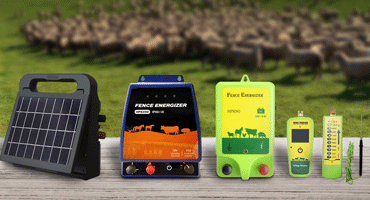
Six models span the typical European catalogue, from a solar unit for smallholders to a 13 kV machine for heavy wildlife pressure. Specifications are taken from current product data.

3.5 J AC/DC workhorse
3.5 J output · 250 acres · 55 miles · 2-year warranty
Horses and cattle on long multi-wire runs.
View product details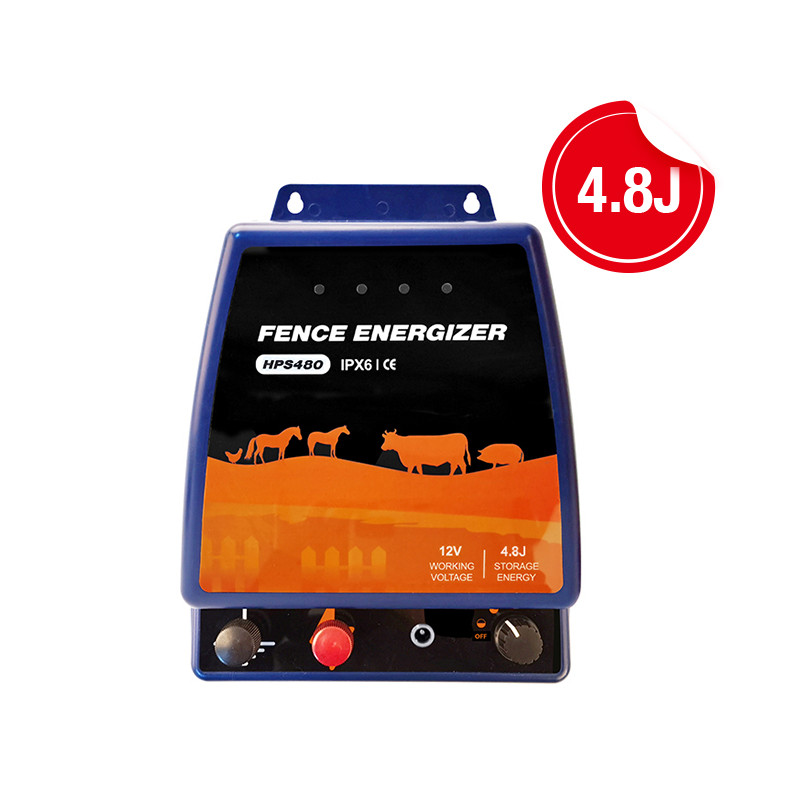
4.8 J with power reserve
4.8 J output · 110 V AC · 2-year warranty
Holds voltage when vegetation load rises after rain.
View product details
2 J / 9 kV livestock charger
2 J output · 9 kV peak · AC 110–240 V + 12 V · 2-year warranty
The mainstream retail specification for mixed herds.
View product details
6 J input / 3.6 J output
3.6 J delivered · solar 15 V · 60-mile range · 2-year warranty
Remote pasture where mains power never reaches.
View product details
1 J solar / 8,000 V peak
1 J stored · 8,000 V peak · 6 V 7 Ah · 2-year warranty
Poultry netting and smallholder plots.
View product details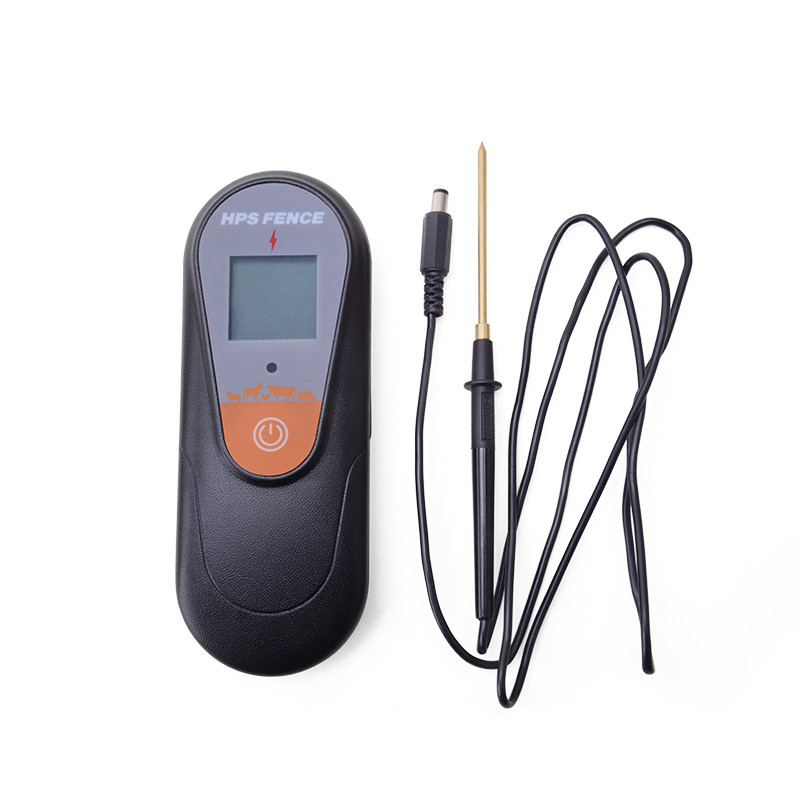
Digital fault-finding tester
0–13 kV · LCD · 9 V battery · 1-year warranty
Ships with first orders to cut support calls.
View product detailsElectric fence energizer manufacturer FAQ for European buyers
How can I tell an electric fence energizer manufacturer from a trading company?
Ask for three documents: the DoC signatory, the factory business licence, and the batch test record of a shipment you already received. A trading company can produce a catalogue in a day; it cannot produce a test record tied to a production batch.
Is a higher joule rating always better on an electric fence energizer?
No. What matters is delivered energy at the far end of the fence, not the stored figure on the label: HPS FENCE 12 J models deliver about 7.2 J, roughly 60% efficiency. A bigger unit on a short, clean run adds cost and battery drain without changing animal behaviour.
What is the MOQ for a first wholesale electric fence energizer order?
One unit for energizers, testers and coop doors, and 100 units for other categories. Mixed-model orders are accepted, so a first order can cover three or four joule ratings instead of one.
Can you support a private-label electric fence energizer programme?
Yes. Logo, retail packaging, model naming, manual language and output specification can all be customised, and multilingual manuals are supported. A label-only change starts at one unit; a new housing or joule rating is quoted as an ODM project with MOQ confirmed per project.
Which certifications should a European buyer expect from an energizer manufacturer?
CE marking supported by an EU Declaration of Conformity, RoHS evidence, and test reports to EN IEC 60335-2-76 for the exact model being supplied. HPS FENCE holds CE, RoHS, TÜV and SGS certification plus ISO 9001, and FCC for the US market only.
HPS FENCE · MANUFACTURER & WHOLESALE SUPPLIER
Your Trusted Partner for Electric Fencing & Farm Solutions
From electric fence energizers and fencing accessories to poultry farming equipment, HPS FENCE supports global distributors, wholesalers, importers, and brands with reliable products, flexible OEM/ODM customization, and long-term supply solutions.
Sources
- IEC 60335-2-76:2002+A1:2006 / EN IEC 60335-2-76 — output energy ≤5 J, pulse duration ≤10 ms, repetition rate ≤1 Hz, measured into a 500 Ω load.
- Directive 2014/35/EU (LVD), Directive 2014/30/EU (EMC), Directive 2011/65/EU (RoHS) — the directives an energizer's Declaration of Conformity should list.
- HPS FENCE product specifications — input and delivered output energy across the solar range.
- HPS FENCE certification and production pages — CE/RoHS/TÜV/SGS records and factory test process.