







How Many Volts Should an Electric Fence Have? A Guide for Distributors
"How many volts should an electric fence have?" is the question every distributor gets from a first-time buyer — and the honest answer is a range, not a number. Species, coat type, fence length, soil moisture and grounding all move the target. For wholesale buyers, the practical task is knowing which voltage band to stock for each market, and which energizer specifications will actually hold that band at the far end of a fence.
An electric fence should read 2,000 V or more for cattle and goats, 3,000 V or more for wooled sheep, and 1,500 V or more for thin-skinned animals such as horses and pigs, according to KZN Agriculture & Rural Development. Commercial guides often quote higher targets — 4,000–5,000 V for sheep — because voltage falls along the line. In practice, specify an energizer that holds 6,000–8,000 V at the terminal so the far end still reads above the species minimum.
Quick facts
- Minimum fence voltage: 2,000 V cattle and goats, 3,000 V wooled sheep, 1,500 V horses and pigs (KZN Agriculture).
- Voltage measures pressure, not energy — joules decide whether the shock can stop an animal.
- Grounding scales with output: one 20 mm × 1 m rod for a 1 J energizer, at least 20 rods for a 20 J unit (KZN Agriculture).
- HPS FENCE holds CE, RoHS, TÜV and SGS certification, with energizers spanning 0.25 J to 12 J.

Electric fence voltage: what the number actually measures
Voltage is the pressure that pushes a pulse along the conductor. It is not the same as energy, and confusing the two is the most common specification error in the trade. A fence reading 8,000 V with very little stored energy behind it will startle an animal but not stop a determined one.
The joules figure decides how much fence length and vegetation the unit can drive. The voltage figure decides whether the pulse can push through wool, hide and wet grass to reach the animal at all. Both numbers matter, and they move independently: a 1 J energizer can be designed to peak at 8,000 V, while a 12 J unit may peak lower but drive five times the distance.
How many volts should an electric fence have? A species guide
South Africa's KZN Department of Agriculture publishes the clearest government baseline, expressed as minimums rather than ideals — which is the correct way to read them, because a fence sitting exactly on the minimum has no margin for a wet week or a grass-covered bottom wire.
| Species | Government minimum | Commercial guides | Why the coat matters |
|---|---|---|---|
| Cattle | 2,000 V | 3,000–5,000 V | Thin hide, learns after one contact |
| Horses | 1,500 V | 2,000–4,000 V | Sensitive skin, but needs visible tape |
| Sheep (wooled) | 3,000 V | 5,000–7,000 V | Wool insulates the animal from the conductor |
| Goats | 2,000 V | 5,000–7,000 V | Thick coat plus a habit of testing fences |
| Pigs | 1,500 V | 2,000–3,500 V | Thin skin, but tests with the snout |
| Poultry | Not specified | 3,000–5,000 V | Feathers insulate; netting design matters more |
Why published electric fence voltage recommendations disagree
Compare a government bulletin with a farm-supply catalogue and the numbers diverge — 3,000 V versus 5,000 V for sheep, for example. That gap is not an error. It reflects three different questions being answered at once.
- Minimum versus design target. Government guidance states the threshold below which a fence stops working. Commercial guidance states what to aim for so the fence still works after two weeks of rain.
- Measured at the terminal versus at the far end. A 6,000 V terminal reading can become 3,500 V two kilometres out. A catalogue quoting "4,000 V for sheep" may be describing the terminal, not the far end.
- Dry versus damp soil. Earth resistance changes with moisture. A system that reads 6,000 V in spring can read 3,000 V in a dry summer without a single component failing.
The practical takeaway for a wholesale buyer is to stop selling a voltage number and start selling a voltage at the far end — which means specifying energizer output, conductor type and earth array together.
Electric fence voltage drop: what is normal along the line
Some drop is physics, not a fault. Wire resistance, joints, gate connections and vegetation all consume voltage. A fence starting at 7,000 V at the energizer and reading 5,500 V at the end of a two to three kilometre run is performing normally. The same fence reading 2,000 V at the far end has a problem, not a design characteristic.
The diagnostic pattern matters more than the absolute number. A gradual decline along the line is expected. A sudden step down at one point means a fault at that point: a broken conductor, a gate handle out of contact, or a branch lying across the wire.

Electric fence grounding: why it changes your voltage reading
The earth array is half the circuit and the variable most often undersized. KZN Agriculture gives a usable rule that scales with output: one 20 mm galvanised pipe driven one metre into permanently moist soil is adequate for a 1.0 J energizer, while a 20 J unit needs at least twenty such rods, all bonded together and connected to the energizer earth terminal.
That ratio explains a pattern distributors see constantly: a customer upgrades from a 2 J to a 8 J energizer, keeps the original single earth rod, and reports that the new unit is "no better". The energizer is fine. The earth cannot return the current the larger unit sends out.
A quick field test: short the fence deliberately some distance away, then measure between the energizer earth terminal and an independent rod driven at least ten metres off. A reading of a few hundred volts or more indicates the earth array needs work.
How to test electric fence voltage at the far end
- Test at the energizer terminal first to establish the source reading.
- Walk to the last post and test again. This is the reading that matters.
- On multi-wire fences, test each wire separately — faults often affect one strand only.
- Record the reading with date and location. A baseline turns a future drop into a diagnosable event.
- If the terminal reading is already low, stop testing the fence and inspect the earth array.
Wholesale electric fence energizers: what voltage to specify for each market
This is where a voltage specification becomes a purchasing decision. Distributors stocking for mixed markets need a range that covers terminal readings from 6,000 V to 13,000 V peak, because the same energizer sold into a dry Australian pasture and a wet New Zealand hillside will behave differently.
Three rules we recommend to wholesale buyers:
- Stock by species, not by price point. A 0.25 J entry unit is a poultry and pet SKU. It is not a cheap cattle energizer, and selling it as one creates returns.
- Pair every energizer with an earth specification. Ship the rod count with the unit, or the customer will under-install and blame the product.
- Include a tester in the first order. Voltage complaints are usually installation issues, and a tester turns a support ticket into a five-minute phone call.
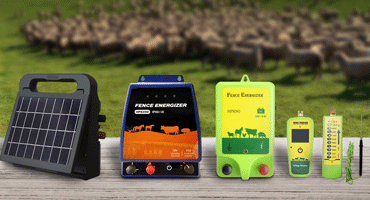
HPS FENCE manufactures energizers from 0.25 J to 12 J across AC, AC/DC, DC battery and solar formats, with IPX6 ingress protection and a 2-year warranty. For OEM and private-label programmes, output voltage, housing colour, branding and manual language can be specified per market.
HPS FENCE as an electric fence energizer manufacturer
HPS FENCE is the brand of Hangzhou Opus Fence Supplies Co., Ltd, a China-based manufacturer of electric fence energizers founded in Hangzhou in 2013. The company's roots in farm and pasture products go back to 2002, and its founder began international trade in 2003. Energizer output spans 0.25 J to 12 J across mains, AC/DC, battery and solar formats, all rated IPX6. Main export markets, in order of priority, are Australia, New Zealand, Europe, the United States, Canada, South America, Korea and Japan.
Test data we publish
Most energizer suppliers quote a joule figure and leave it there. We publish how the output is measured, because a stored rating and a delivered rating can differ by 40% — and distributors are the ones who absorb the returns when the difference shows up in the field.
Real output test method published, not just a label value.
Read the test methodLong continuous running before shipment to verify long-term reliability.
See the production processPackaging tested for e-commerce and container handling.
See the drop testWater ingress verified per batch, not only on a prototype.
View certificationsEvery unit checked before packing, with traceable batch records.
Inspection stepsOEM and private label: what can be customised
For distributors building their own brand, the useful question is not whether a factory offers OEM, but how deep the customisation goes. This is the range available on our energizer lines.
Branding and packaging
- Logo on housing, retail box and manual
- Model naming and colour to suit your catalogue
- Packaging engineered for e-commerce and container transit
Technical and documentation
- Output voltage and joule specification per market
- Multilingual manuals
- Full ODM development with schedule and sample approval
Minimum order quantities for a custom specification depend on the model and the depth of change; they are confirmed per project. Standard energizer units start from one piece, which makes a trial order practical before committing to a branded run.
Electric fence energizer models and their peak voltage
These six cover the voltage bands most often requested by distributors, from a 0.5 J solar unit for poultry to a 13 kV model for heavy wildlife pressure. Specifications are taken from current product data.

3.5 J AC/DC workhorse
3.5 J output · 250 acres · 55 miles · 2-year warranty
The volume SKU for horses and cattle on long multi-wire runs.
View product details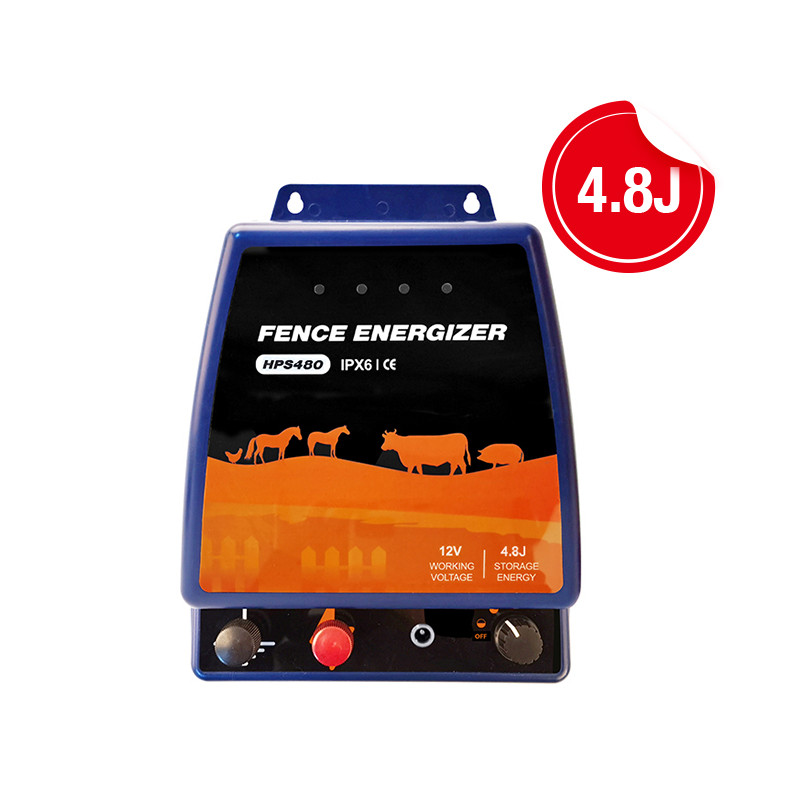
4.8 J with power reserve
4.8 J output · 110 V AC · 2-year warranty
Holds voltage when vegetation load rises after rain.
View product details
2 J / 9 kV livestock charger
2 J output · 9 kV peak · AC 110–240 V + 12 V · 2-year warranty
The mainstream retail specification for cattle and mixed herds.
View product details
1 J solar / 8,000 V peak
1 J stored · 8,000 V peak · 6 V 7 Ah battery · 2-year warranty
Off-grid livestock and predator control where mains never reaches.
View product details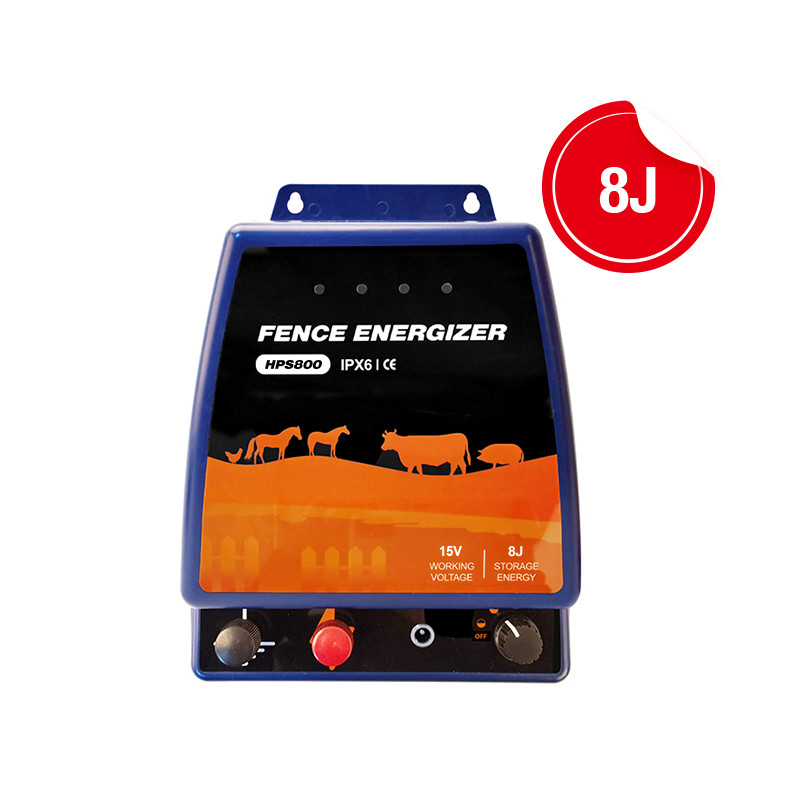
4.8 J output / 13 kV peak
4.8 J output · 13 kV peak · 12 V or 15 V · 2-year warranty
Heavy wildlife pressure — elephants, boar and large predators.
View product details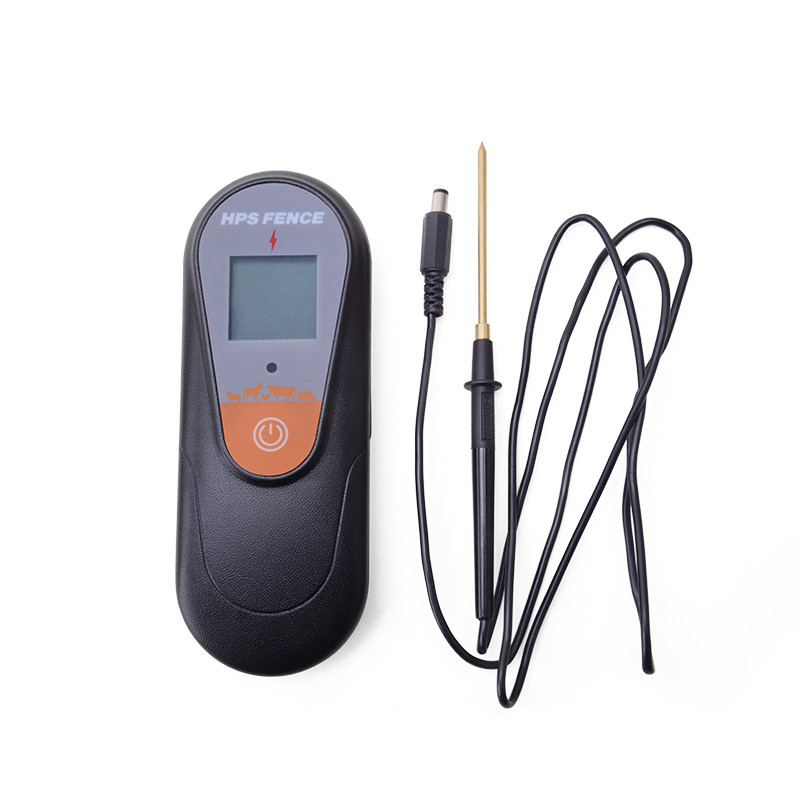
Digital fault-finding tester
0–13 kV range · LCD display · 9 V battery · 1-year warranty
Ship one with every first order; it prevents most voltage complaints.
View product detailsElectric fence voltage FAQ
Is 8,000 volts too much for an electric fence?
No, provided the energizer complies with IEC 60335-2-76, which limits energy per pulse rather than peak voltage. High voltage helps the pulse push through wool and wet grass. What matters for animal welfare is that the pulse is short and infrequent, not that the voltage is low.
Why does my fence read high at the energizer but low at the end?
Voltage is being consumed along the line by resistance, joints, gate connections or vegetation contact. Test at the midpoint to separate a gradual drop, which is normal, from a sudden step, which indicates a fault in that section.
What is the MOQ for wholesale electric fence energizers?
One unit for energizers, testers and coop doors. Other product categories start at 100 units. Small-batch trial orders and mixed-model orders are both accepted.
Can output voltage be customised for our market?
Yes. HPS FENCE supports OEM and private-label programmes covering output specification, housing colour, branding and manual language. The exact MOQ for a custom specification depends on the model and is confirmed on request.
Which certifications do your energizers carry?
CE, RoHS, TÜV and SGS, plus ISO 9001 and FCC for the company. Certificates are published on the HPS FENCE certification page and can be supplied per model for customs and marketplace compliance.
HPS FENCE · MANUFACTURER & WHOLESALE SUPPLIER
Your Trusted Partner for Electric Fencing & Farm Solutions
From electric fence energizers and fencing accessories to poultry farming equipment, HPS FENCE supports global distributors, wholesalers, importers, and brands with reliable products, flexible OEM/ODM customization, and long-term supply solutions.
Sources
- KZN Department of Agriculture & Rural Development — Electric Fencing in Agriculture: minimum fence voltage by species, earth peg requirements, strand spacing.
- IEC 60335-2-76:2002+A1:2006 / BS EN IEC 60335-2-76:2021 — electric fence energizers: output energy ≤5 J, pulse duration ≤10 ms, repetition rate ≤1 Hz.
- IEC 60479-1 — effects of current on human beings and livestock, referenced for pulse-safety context.
- HPS FENCE product specifications — model output energy, peak voltage and power source, taken from current product data.
- HPS FENCE certification page — CE / RoHS / TÜV / SGS certificates (hpsfence.com/comm08).