




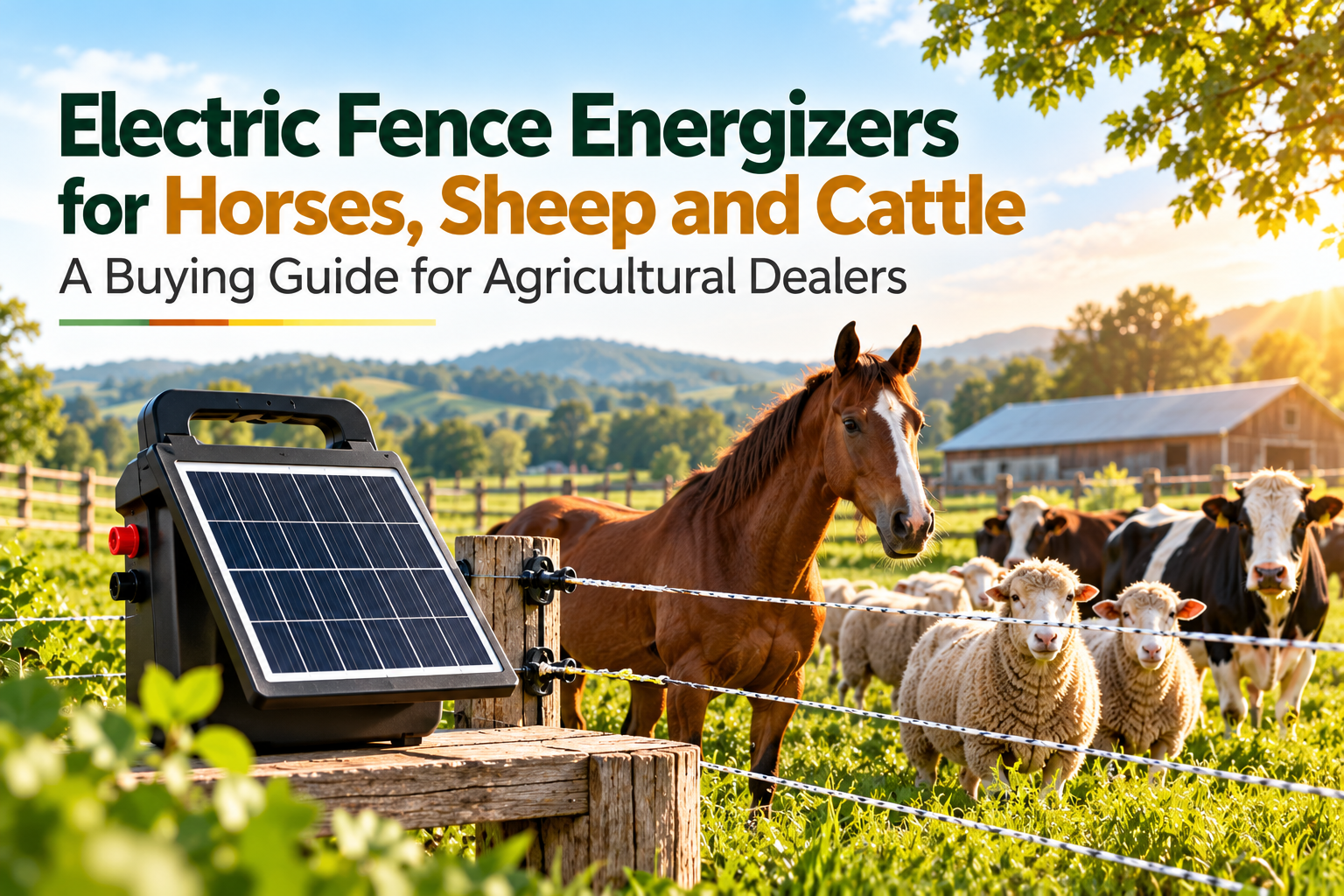
Electric Fence Energizers for Horses, Sheep and Cattle: A Buying Guide for Agricultural Dealers
A dealer stocking fencing for horses, sheep and cattle is effectively stocking three different products. The animals differ in coat, body mass, behaviour and the voltage they will respect — and those differences change the energizer, the conductor and the post spacing. Selling one "all-round" unit across all three is the fastest way to generate returns.
For a dealer range, stock three energizer tiers: 1.5–2 J delivered for horses (with wide visible tape), 2–3 J for cattle on multi-wire runs, and 3–3.6 J for wooled sheep and goats, because wool insulates the animal from the conductor. KZN Agriculture sets the minimum fence voltage at 1,500 V for horses, 2,000 V for cattle and goats, and 3,000 V for wooled sheep — design above those figures, never at them.
Quick facts
- Minimum fence voltage: 1,500 V horses, 2,000 V cattle and goats, 3,000 V wooled sheep (KZN Agriculture).
- Horse paddocks fenced electrically showed no rise in heart rate, HRV or salivary cortisol in controlled trials (Glauser 2015).
- Strand heights differ by species: cattle 290/600/900 mm, sheep 150/335/600/900 mm, pigs 150/335/600 mm.
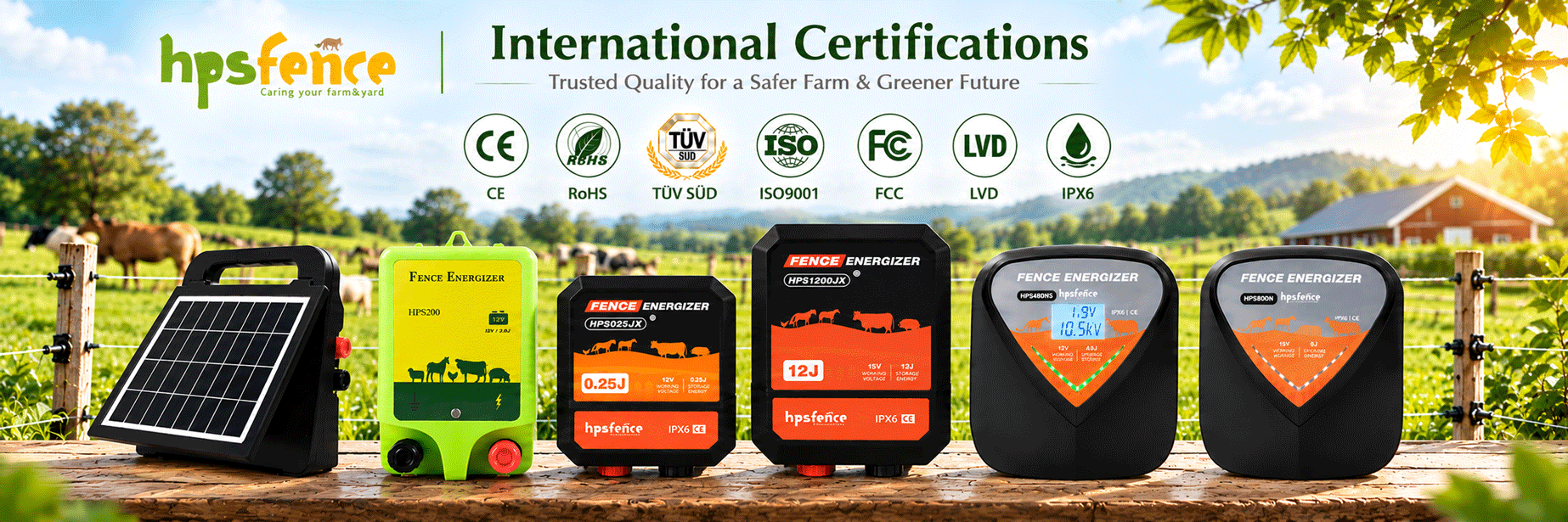
- HPS FENCE energizers run from 0.25 J to 12 J with CE, RoHS, TÜV and SGS certification and a 2-year warranty.
Why one energizer cannot serve horses, sheep and cattle
Three variables separate the species. Coat resistance decides how much voltage is needed to reach the skin: a horse's thin coat conducts readily, while wool can insulate a sheep almost completely. Behaviour decides how the animal tests the fence: cattle push with the head and shoulder, sheep push through gaps, horses bolt. Body mass decides the consequences of failure: a horse through a fence is a veterinary bill, a sheep is a lost animal.
That is why the energizer tier, conductor type and strand height all move together. A dealer who understands this sells three configurations instead of one compromise.
Electric fence energizers for horses: visible tape and a convincing first shock
Horses are the most sensitive of the three and the least tolerant of poor design. The welfare evidence is reassuring: in controlled trials comparing wooden and electric paddocks, horses showed no difference in heart rate, heart rate variability or salivary cortisol. What changed was behaviour — they avoided the area near the fence, which is exactly the intent.
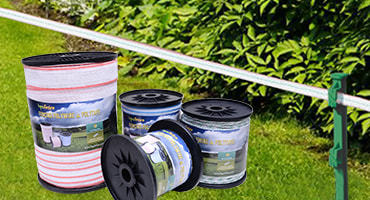
The design priority for horses is visibility rather than raw power. Wide polytape reads as a physical barrier from a distance; thin wire does not, and a horse that cannot see a fence is more likely to run through it. The British Veterinary Association specifically recommends highly visible tape or rope for flight animals.
- Energizer: 2–3.5 J delivered, with a strong first pulse. A weak unit produces a horse that keeps testing.
- Conductor: 40 mm polytape at chest height, plus a second strand lower down.
- Spacing: generous paddock area; horses use less of a small paddock and show more pawing and kicking.
- Training: introduce the fence in a small pen before turnout, so the first contact happens under supervision.
Electric fence energizers for sheep: wool changes the maths
Sheep are the reason "same joule rating for everything" fails. Wool is an insulator, so the voltage that startles a cow may barely register through a fleece. The published minimum for wooled sheep is 3,000 V — double the horse figure — and commercial guides often recommend designing for 5,000–7,000 V at the terminal so the far end still clears the threshold.
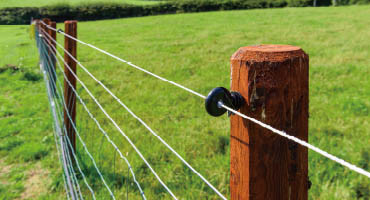
Sheep also test fences differently. They push with the head and try to go under or through, which is why netting outperforms sparse wire for flock containment. A four-wire configuration with the bottom strand at 150 mm is the common specification.
Electric fence energizers for cattle: joules over distance
Cattle are the easiest species to train and the hardest on the energizer, because cattle fencing usually means long runs. Learning happens fast: in a seven-day trial with animals new to electric fencing, 90% of all shocks occurred on day one, 47% of the cattle were never shocked at all and 37% received exactly one shock.
The engineering challenge is distance. Every metre of conductor, every joint and every gate connection consumes voltage, so the energizer has to be sized for the far end rather than the terminal. Two to three strands at 290, 600 and 900 mm is the standard configuration; a 2 J unit suits moderate runs, and 3.5–4.8 J is the working range for long perimeters with vegetation.
Voltage and joule targets by species
| Species | Minimum voltage | Design target at terminal | Delivered joules | Conductor |
|---|---|---|---|---|
| Horses | 1,500 V | 6,000–7,000 V | 2–3.5 J | 40 mm polytape, 2 strands |
| Cattle | 2,000 V | 6,000–8,000 V | 2–4.8 J | High-tensile wire, 2–3 strands |
| Sheep (wooled) | 3,000 V | 7,000–9,000 V | 3–4.8 J | Netting or 4-strand wire |
| Goats | 2,000 V | 7,000–9,000 V | 3–4.8 J | 4-strand wire, low bottom strand |
| Pigs | 1,500 V | 5,000–6,000 V | 2–3 J | 3 strands, nose height |
Conductor and strand spacing by species
| Species | Strands | Heights above ground | Why |
|---|---|---|---|
| Cattle and calves | 3 | 290 / 600 / 900 mm | Head and shoulder contact at chest height |
| Sheep, level ground | 4 | 150 / 335 / 600 / 900 mm | Low bottom strand stops pushing under |
| Sheep, uneven ground / goats | 4 | 150 / 290 / 600 / 900 mm | Compensates for dips in terrain |
| Pigs | 3 | 150 / 335 / 600 mm | Snout-level first contact |
| Horses | 2 | Chest height + lower rail | Visibility matters more than strand count |
Strand heights from KZN Agriculture guidance. Fence height for domestic livestock is rarely required above 900 mm; security and game fencing is a separate category at 2,000 mm.
What an agricultural dealer should stock for each species
A three-tier stocking model covers most of a dealer's enquiries without tying up capital in slow-moving SKUs.
- Tier 1 — horse and smallholder: one 2–3.5 J unit, one 1 J solar unit, polytape in two widths.
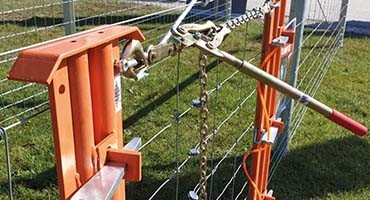
- Tier 2 — cattle and mixed grazing: one 3.5–4.8 J unit, high-tensile wire, insulators, gate handles.
- Tier 3 — sheep and goats: one 3.6–4.8 J unit plus netting, and a tester in every tier.
Two accessories decide whether the sale sticks: a digital tester and a spare battery. Most "the energizer is weak" complaints are earth or vegetation problems, and a tester turns a return into a phone call.
Warranty, spare parts and manufacturer support for dealers
HPS FENCE is the brand of Hangzhou Opus Fence Supplies Co., Ltd, a China-based manufacturer of electric fence energizers founded in Hangzhou in 2013, with roots in farm and pasture products since 2002. Output runs from 0.25 J to 12 J across mains, AC/DC, battery and solar formats, all rated IPX6.
Our output test method is published rather than kept internal.
Read the test methodPackaging validated for container and parcel handling.
See the drop testIngress protection verified per batch.
View certificationsEnergizers matched to horses, sheep and cattle
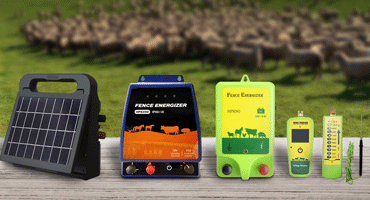
Six models cover the three tiers. Specifications are taken from current product data, including delivered output where both figures are published.

3.5 J AC/DC — horses
3.5 J output · 250 acres · 55 miles · 2-year warranty
Enough energy to train a horse on first contact; long-run capable.
View product details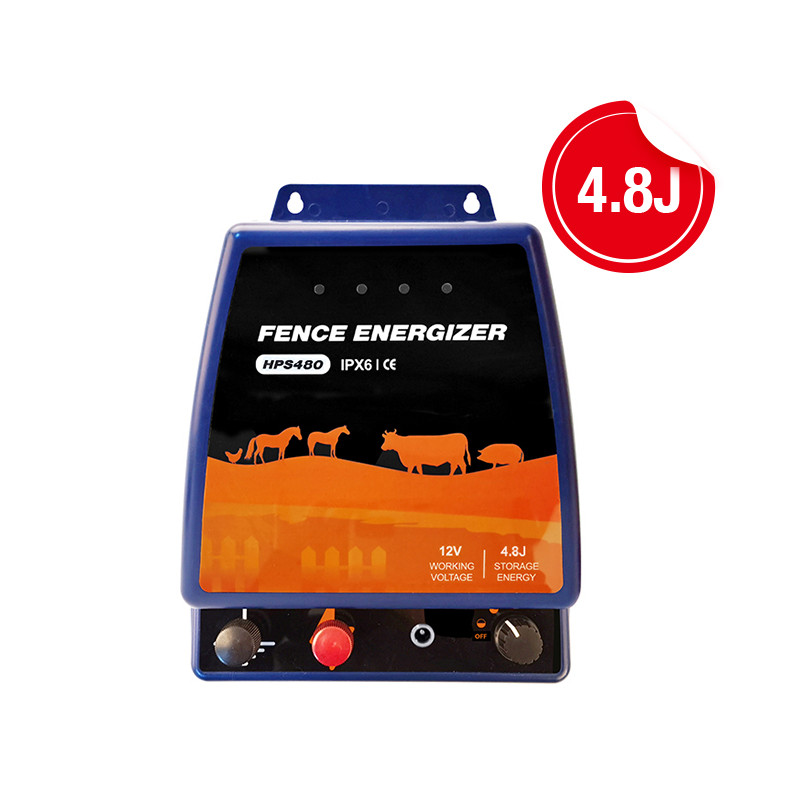
4.8 J AC — cattle
4.8 J output · 110 V AC · 2-year warranty
Long perimeter runs with vegetation pressure.
View product details
2 J / 9 kV — mixed herds
2 J output · 9 kV peak · AC 110–240 V + 12 V · 2-year warranty
The general-purpose SKU for cattle and small mixed farms.
View product details
6 J input / 3.6 J output — sheep
3.6 J delivered · solar 15 V · 60-mile range · 2-year warranty
Wooled sheep on remote pasture without mains power.
View product details
1 J solar / 8,000 V peak
1 J stored · 8,000 V peak · 6 V 7 Ah · 2-year warranty
The smallholder entry point alongside poultry netting.
View product details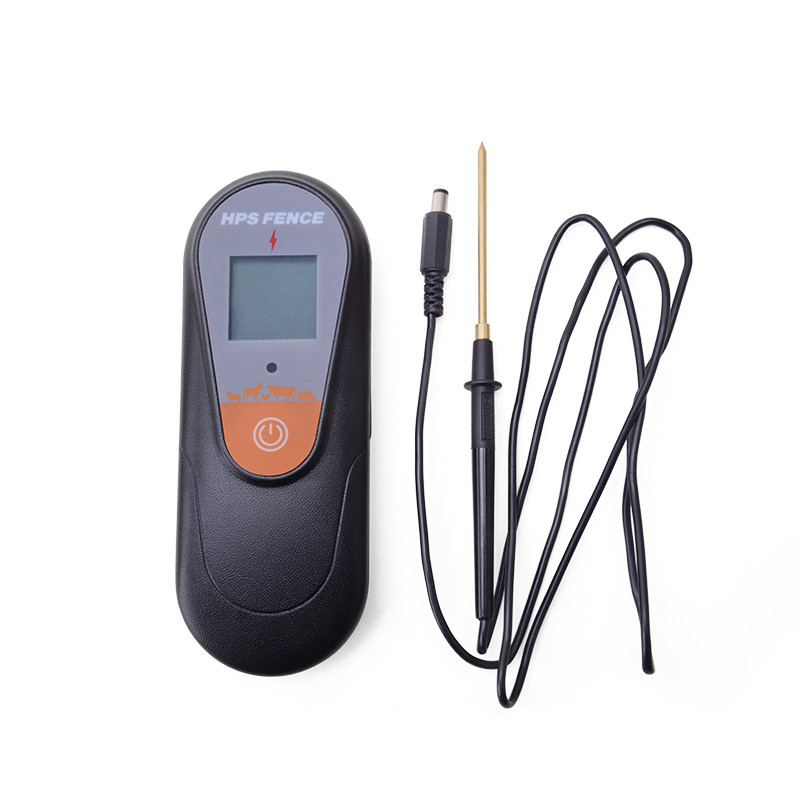
Digital fault-finding tester
0–13 kV · LCD · 9 V battery · 1-year warranty
One with every dealer order — it prevents most voltage complaints.
View product detailsElectric fence energizer buying guide FAQ for agricultural dealers
Can one electric fence energizer serve horses, sheep and cattle on the same farm?
Yes, if it is sized for the most demanding species, normally wooled sheep at 3,000 V, and the fence is split into sections. One 3.5-4.8 J unit covers most mixed farms, while a single under-sized unit is what produces the complaint that the sheep keep walking through.
What joule rating should a dealer stock for horse customers?
2-3.5 J delivered covers most horse customers. Below 2 J the first shock is often unconvincing and the horse keeps testing the fence; above 3.5 J adds cost and battery drain without changing behaviour.
Why do sheep need a higher electric fence voltage than cattle?
Wool insulates the animal from the conductor, so the pulse needs more voltage to drive current through the fleece. KZN Agriculture and Rural Development puts the minimum at 3,000 V for wooled sheep, against 2,000 V for cattle and 1,500 V for horses.
What is the MOQ for a mixed dealer order of electric fence energizers?
One unit for energizers, testers and coop doors, and 100 units for other categories. Mixed-model orders are accepted, so a dealer can open a range with three energizers, one tester and a roll of netting in a single shipment.
Are spare batteries and fence testers available as catalogue items?
Yes. Sealed lead-acid batteries in 6 V 7 Ah and 12 V 12 Ah, solar controllers, earth rods and digital testers are orderable line items, not special requests. Spare-part availability belongs in the dealer agreement, because a battery that dies in the second season is a support conversation the dealer has to win.

HPS FENCE · MANUFACTURER & WHOLESALE SUPPLIER
Your Trusted Partner for Electric Fencing & Farm Solutions
From electric fence energizers and fencing accessories to poultry farming equipment, HPS FENCE supports global distributors, wholesalers, importers, and brands with reliable products, flexible OEM/ODM customization, and long-term supply solutions.
Sources
- KZN Department of Agriculture & Rural Development — Electric Fencing in Agriculture: minimum voltage by species, strand heights, earth requirements.
- Glauser A. et al. — No increased stress response in horses on small and electrically fenced paddocks, Applied Animal Behaviour Science, 2015.
- McDonald et al. 1981 — cattle learning data, summarised in VKM Report 2017:31.
- British Veterinary Association — policy position on electric containment fences: visible tape for horses.
- IEC 60335-2-76 / EN IEC 60335-2-76 — output energy, pulse duration and repetition limits.
- HPS FENCE product specifications — output energy and power source by model.